Youngish: Where Handwritten Elegance Meets Modern Design Clarity
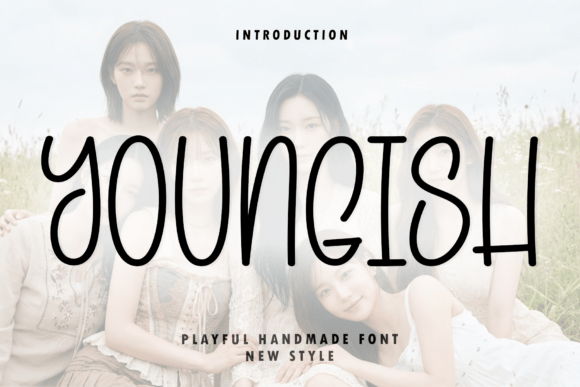
In a digital landscape saturated with geometric sans-serifs and algorithmically optimized UI fonts, Youngish arrives not as a novelty—but as a quiet recalibration. It’s a sophisticated and fluid script font designed to bring a graceful, hand-penned touch to contemporary creative projects. What sets it apart isn’t just its aesthetic, but its intentionality: vertically elongated letterforms, a fine monolinear stroke weight, and smooth character joins work in concert to evoke the confidence of practiced handwriting—without sacrificing legibility or versatility.
A Shift Toward Intentional Typography
Designers and brand builders aren’t rejecting digital tools—they’re refining how those tools express humanity. Over the past five years, we’ve seen a measurable pivot away from “neutral” typefaces used by default toward fonts that carry subtle narrative weight. This isn’t about nostalgia for analog; it’s about signaling care, craft, and continuity in a world where attention is fragmented and authenticity is earned—not assumed.
Youngish fits squarely into this evolution. Its tall, sweeping ascenders and rhythmic visual flourishes don’t mimic calligraphy in a literal sense—they reinterpret ink’s natural flow through disciplined digital form. The result feels both personal and polished: a signature you’d trust on a wedding invitation, a boutique packaging label, or a quietly confident Instagram story header.
Why Monolinear Script Works—Now More Than Ever
Historically, script fonts carried risk: too ornate, they blurred at small sizes; too loose, they undermined professionalism. Youngish sidesteps those pitfalls by anchoring its elegance in consistency. The uniform stroke weight ensures crisp rendering across screens, print, and even variable-width displays—no pixelation, no unintended contrast shifts. That reliability matters deeply when your logo appears as a tiny favicon, a watermark on a portfolio image, or a headline in a newsletter preview pane.
This technical restraint also supports accessibility. Unlike high-contrast scripts that can strain readability for dyslexic readers or those with low vision, Youngish’s even line weight and open counters improve character recognition without compromising its expressive voice. It’s a reminder that sophistication doesn’t require complexity—and that thoughtful design includes who’s reading, not just what’s being said.
Real-World Applications, Not Just Aesthetic Ideals
Consider how Youngish functions in practice:
- Boutique brand identities: A ceramicist launching a new studio uses Youngish for her logo lockup and business cards—not as a standalone display font, but paired with a clean, neutral sans-serif for body text. The contrast communicates warmth and precision in equal measure.
- Personal signature watermarks: Photographers and illustrators apply Youngish subtly in the lower corner of portfolio images. Its vertical rhythm keeps the mark legible yet unobtrusive—even at 12% opacity—and avoids the dated look of overly looped or bubbly scripts.
- Elegant lifestyle marketing: A wellness coach designing a seasonal email series opts for Youngish in subject lines and section headers. Readers scan quickly, but the font’s gentle movement slows just enough to suggest intention—without demanding attention like a bold serif or flashy display face.
- Professional social media headers: On LinkedIn or Instagram, where first impressions happen in under two seconds, Youngish adds distinctiveness without distraction. It signals individuality while maintaining alignment with platform norms—no clashing with interface typography or violating content guidelines.
How Creative Workflows Are Changing—And Why Youngish Fits Naturally
Today’s creators rarely operate in silos. A freelance designer might draft copy, shoot product photos, edit video, and schedule posts—all within the same week. Tools have converged (Figma, Canva, Adobe Express), but expectations haven’t softened: audiences still respond to cohesion, tone, and texture. That’s where a font like Youngish becomes functional infrastructure—not just decoration.
Its smooth character joins mean fewer manual kerning adjustments in layout software. Its consistent x-height and ascender/descender ratios reduce trial-and-error when pairing with secondary typefaces. And because it’s built for modern rendering engines, it performs reliably whether embedded in a WordPress theme, exported as SVG for web use, or licensed for desktop applications.
This isn’t about making design “easier.” It’s about removing friction so creators spend less time troubleshooting typographic quirks and more time shaping meaning.
What’s Changed Since the Last Wave of Script Fonts?
Compare Youngish to popular script fonts from even five years ago, and the distinction becomes clear. Earlier iterations often leaned heavily into decorative extremes—exaggerated swashes, irregular baselines, or exaggerated contrast—to stand out in crowded marketplaces. But those choices aged quickly, especially as platforms tightened display constraints and users grew more visually literate.
Youngish reflects a maturing sensibility: restraint as refinement. Its flourishes are rhythmic, not random. Its spacing is generous, not airy. Its vertical emphasis creates presence without volume—ideal for responsive layouts where height is often more flexible than width.
That evolution mirrors broader shifts in branding strategy. Consumers increasingly associate minimalism with mass production—but they connect subtle variation, intentional asymmetry, and human-scale detail with care. Youngish delivers that nuance without requiring custom lettering commissions.
Practical Considerations for Everyday Use
Using Youngish effectively doesn’t demand advanced typography training—but it does benefit from mindful application. Here’s what works well in practice:
- Leverage its verticality intentionally: Use it for short headlines, names, or labels—not long paragraphs. Let its height breathe on clean backgrounds rather than competing with dense imagery.
- Pair thoughtfully: Complement it with a humanist sans-serif (like Inter, Poppins, or Lato) or a low-contrast serif (such as Literata or IBM Plex Serif). Avoid other scripts or ultra-thin fonts that might visually compete.
- Test at multiple sizes and weights: While Youngish shines at 24–48pt for display, it remains legible down to 16pt in headings—especially with adequate line height and contrast. Avoid using it below 14pt for body text, even in print.
- Respect its tone: It’s not suited for tech startups pitching disruption or law firms emphasizing precedent. It thrives where warmth, curation, and personal resonance matter—lifestyle brands, creative services, artisan goods, educational offerings focused on growth and reflection.
Importantly, Youngish doesn’t ask users to choose between personality and professionalism. It bridges that gap—not by straddling styles, but by embodying a single, coherent design philosophy: clarity shaped by hand, refined by discipline.
Looking Ahead—Without Overpromising
Will Youngish replace every other script font? No—and it shouldn’t. Typography’s strength lies in diversity of voice, not uniformity of solution. What makes Youngish notable is how precisely it answers a current need: the desire for type that feels both considered and effortless, distinctive yet dependable.
As AI-generated visuals become more common, human-crafted details gain renewed value—not as relics, but as anchors. A well-chosen script font like Youngish doesn’t shout “handmade”; it whispers “thoughtful,” and that whisper carries further in today’s noise.
For professionals building brands, educators crafting course materials, entrepreneurs launching their first website, or hobbyists sharing handmade work online—Youngish offers more than style. It offers alignment: between intention and execution, between digital tools and tactile sensibility, between what you make and how people feel when they encounter it.