Besty Baby: The Handwritten Font That Brings Warmth, Personality, and Joy to Every Design
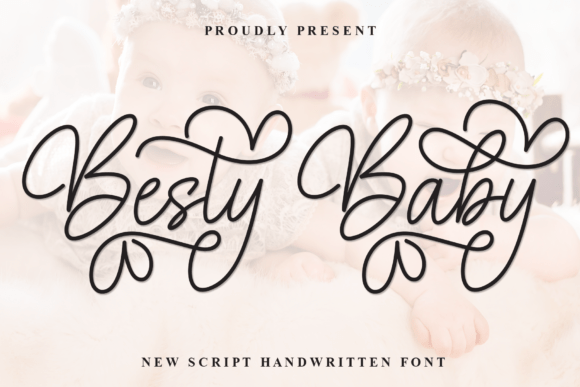
Imagine opening a wedding invitation and instantly feeling the love, care, and quiet excitement behind it—not just from the words, but from the way they’re written. That’s the magic of Besty Baby: a charming, amicable handwritten display font designed not just to be read, but to be felt. It doesn’t shout—it smiles, winks, and leans in with gentle confidence. Whether you're designing for a milestone moment or simply adding soul to everyday visuals, Besty Baby delivers expressive warmth without sacrificing clarity or versatility.
What Makes Besty Baby Stand Out in a Sea of Handwritten Fonts?
Not all handwritten fonts are created equal. Many lean too far into whimsy—becoming hard to read at smaller sizes—or veer into overly rigid calligraphy that lacks spontaneity. Besty Baby strikes a rare balance: it’s animated and joyful, yet consistently legible; personal and playful, yet professionally polished.
Each glyph is crafted with subtle variation—slight shifts in stroke weight, organic entry and exit strokes, and gentle irregularities that mimic natural handwriting. But unlike rushed script fonts, Besty Baby was designed intentionally. Letters connect smoothly where needed (ideal for elegant monograms or flowing headlines), while remaining distinct and readable in standalone use—like on gift tags, social media graphics, or product packaging.
Its lowercase ‘a’, ‘g’, and ‘y’ carry soft, open forms that invite the eye. Uppercase letters have friendly curves—not stiff geometry—and generous x-heights ensure strong presence even at modest sizes. And because it includes both standard and stylistic alternates, you can easily swap in a bouncier ‘t’, a more flourished ‘f’, or a cozier ‘s’ to fine-tune tone without switching fonts.
Where Besty Baby Truly Shines: Real-World Use Cases
Besty Baby isn’t just another pretty face in your font library—it’s a practical creative partner across multiple contexts. Here’s where it adds unmistakable value:
- Wedding Stationery: From save-the-dates to menu cards, Besty Baby communicates intimacy and intention. Its warmth makes formal events feel personal—not cold or generic. Pair it with a clean sans-serif for body text (like Montserrat or Inter) to create elegant contrast that guides the reader effortlessly.
- Greeting Cards & Stationery: Birth announcements, thank-you notes, birthday cards—even condolence messages benefit from its gentle humanity. Unlike sterile digital type, Besty Baby suggests time, thought, and tenderness were invested in the message.
- Small Business Branding: Cafés, boutiques, florists, and baby brands often rely on approachability. Besty Baby works beautifully in logos, signage, and Instagram story templates—especially when paired with warm color palettes and soft photography.
- Digital Invites & Social Graphics: With responsive web fonts now widely supported, Besty Baby renders cleanly across devices. Use it sparingly but purposefully—headline text, quote overlays, or CTA buttons—to add emotional resonance without compromising load times or accessibility.
Designing with Intention: Tips for Using Besty Baby Well
Like any expressive font, Besty Baby rewards thoughtful application. Overuse dilutes its charm—think of it as your favorite vintage scarf: special, meaningful, and best worn with intention.
Start by reserving it for headlines, names, short quotes, or focal phrases. Avoid long paragraphs or dense blocks of text—its personality shines brightest when given room to breathe. For body copy, choose a highly legible companion font with neutral proportions and open spacing.
Pay attention to letter spacing. Besty Baby benefits from slight tracking adjustments—often +10 to +25 units in design apps—to preserve its airy, handwritten rhythm. Kerning pairs like “To”, “We”, or “Love” may need manual tweaking for optimal flow, especially in logos or monograms.
Color matters, too. Soft pastels, creamy off-whites, deep charcoal, or muted terracottas complement its tone beautifully. Avoid harsh neon contrasts unless irony or bold youthfulness is part of your brand voice—Besty Baby’s strength lies in sincerity, not sarcasm.
Technical Considerations: Compatibility, Licensing, and Workflow Fit
Besty Baby is available in OpenType (.otf) and web-ready WOFF2 formats—making it easy to install locally or embed via CSS for websites and email campaigns. It supports Latin-based languages (including extended accents for Spanish, French, and Portuguese), so it’s well-suited for bilingual stationery or global small businesses.
Licensing is straightforward: one-time purchase options cover personal and commercial use, including unlimited projects, merchandise, and digital distribution—no recurring fees or hidden restrictions. That means whether you're a freelance designer crafting invites for 20 clients a year or a boutique owner updating your Shopify banner monthly, you’re covered.
It integrates seamlessly into modern creative workflows. Use it natively in Adobe Creative Cloud (Photoshop, Illustrator, InDesign), Figma (via font syncing or plugin), Canva (uploaded as custom font), or Affinity Suite. For developers, it’s CDN-friendly and performs well with @font-face declarations—just remember to include fallbacks and optimize loading with font-display: swap.
Why Designers and Clients Keep Coming Back to Besty Baby
Clients don’t just pick fonts—they pick feelings. When a bride chooses Besty Baby for her invitations, she’s not selecting a typeface; she’s choosing how guests will feel when they first hold that piece of paper. Likewise, when a new parent selects it for a birth announcement, they’re signaling warmth, vulnerability, and celebration—all before a single word is read.
That emotional resonance translates directly into engagement. Studies show that human-centered typography increases dwell time, improves recall, and strengthens brand connection—especially in emotionally charged contexts like weddings, milestones, or life transitions. Besty Baby doesn’t distract; it deepens.
And for designers? It saves time without sacrificing originality. Instead of spending hours custom-lettering a headline or adjusting bezier curves to mimic authenticity, Besty Baby delivers hand-crafted nuance out of the box—freeing you to focus on layout, storytelling, and client collaboration.
Final Thoughts: Sweetness With Substance
“Sweet” doesn’t mean superficial—and neither does Besty Baby. Its charm is backed by intelligent design decisions: balanced metrics, thoughtful alternates, cross-platform reliability, and emotional intelligence baked into every curve. It’s the kind of font that feels like a collaborator rather than a tool—a quiet voice that says, “This matters,” without ever raising its tone.
If your work lives at the intersection of heart and craft—if you design for moments that deserve tenderness, celebration, or quiet reverence—then Besty Baby isn’t just an option. It’s a natural fit. Not because it’s trendy, but because it’s true: true to handwriting’s humanity, true to design’s purpose, and true to the people who’ll ultimately experience your work.
So go ahead—let your next headline smile. Let your next card feel like a hug. Let your next brand introduction say, “We’re glad you’re here.” With Besty Baby, you’re not just choosing a font. You’re choosing kindness, one letter at a time.