Milksake: The Handwritten Display Font That Brings Warmth, Joy, and Authenticity to Every Design
Typography is far more than letters on a page—it’s emotion made visible. In an age saturated with sleek, minimalist sans-serifs and algorithmically optimized fonts, a growing number of designers, small business owners, educators, and creatives are turning to something deeply human: handwritten display fonts. Among them, Milksake stands out—not just for its visual charm, but for its remarkable ability to evoke genuine warmth, sincerity, and happiness. Whether you're designing a wedding invitation, crafting a heartfelt greeting card, or branding a cozy café, Milksake transforms text into tactile, joyful experience.
What Is Milksake—and Why Does It Feel So Inviting?
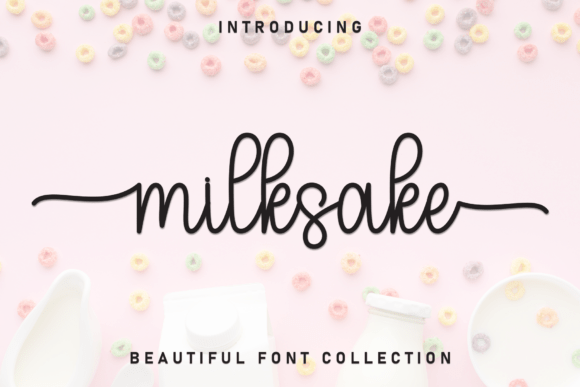
Milksake is a carefully crafted handwritten display font, designed to mirror the natural flow, subtle inconsistencies, and gentle rhythm of real pen-on-paper writing. Unlike generic script fonts that rely on repetitive loops or exaggerated flourishes, Milksake features organic stroke variation, soft terminals, and thoughtful spacing—each letter drawn with intention and care. Its curves feel relaxed, not rigid; its baseline gently sways, never mechanical. This intentional imperfection is what makes it feel authentic, not artificial.
Think of it this way: if Helvetica is a crisp white shirt—clean, professional, and universally accepted—Milksake is your favorite well-worn sweater: soft, familiar, and full of personality. It doesn’t shout. It smiles. And that quiet confidence is precisely why it resonates so powerfully in emotionally driven design contexts.
The Purpose Behind the Playfulness
At its core, Milksake serves a clear purpose: to humanize digital communication. In a world where emails replace handwritten notes and social media posts often prioritize speed over soul, Milksake helps designers reintroduce empathy, intimacy, and individuality into visual language.
It’s especially effective in scenarios where emotional connection matters most:
- Wedding invitations — Milksake adds elegance without formality, making guests feel personally welcomed rather than formally addressed.
- Greeting cards and thank-you notes — Its warmth reinforces sincerity, helping messages land with greater emotional impact.
- Café menus, boutique packaging, and artisanal branding — It signals craftsmanship, care, and approachability—key traits for small businesses building community trust.
- Educational materials for young learners — Its friendly, legible script supports early literacy while feeling less intimidating than rigid calligraphic styles.
How Milksake Fits Into Modern Creative Workflows
Milksake isn’t just nostalgic—it’s practical. Built with modern design tools in mind, it includes OpenType features like ligatures, alternate characters, and contextual swashes. These allow designers to avoid repetitive patterns and create truly unique, hand-tailored compositions—even when working digitally. For example, typing “love” might automatically substitute a charming connected “ov” ligature, while “forever” could trigger a graceful terminal flourish on the final “r.”
Importantly, Milksake is optimized for both print and screen use. Its generous x-height and open counters ensure readability at smaller sizes (e.g., 18–24pt in greeting cards), while its expressive details shine at larger scales (e.g., 60+pt as a headline or monogram). Designers using Adobe Creative Suite, Figma, Canva, or Affinity apps can install and deploy it seamlessly—no technical barriers, no steep learning curve.
Dispelling Common Misconceptions About Handwritten Fonts
Before diving in, it’s helpful to clarify a few widespread assumptions:
- “Handwritten fonts aren’t professional.” — False. When used intentionally and contextually, fonts like Milksake convey authenticity, creativity, and attention to detail—qualities highly valued in today’s brand-conscious market. Think of brands like Oatly, Wild Friends, or Little Passports: all leverage warm, hand-drawn typography to build trust and relatability.
- “They’re hard to read.” — Not with Milksake. While some decorative scripts sacrifice legibility for flair, Milksake prioritizes clarity. Its lowercase “a,” “g,” and “s” follow conventional shapes, and spacing avoids visual crowding—making it accessible across age groups and reading abilities.
- “They only work for ‘cute’ projects.” — Too limiting. Milksake pairs beautifully with strong sans-serif body text (like Inter or Poppins) to create balanced, contemporary layouts. Used sparingly—as a headline, logo lockup, or accent phrase—it adds dimension without overwhelming.
Real-World Applications: From Concept to Click
Consider these everyday examples where Milksake elevates intention into impact:
- A photographer uses Milksake for client welcome packets—transforming administrative documents into personal keepsakes that reflect their empathetic, storytelling-driven approach.
- A teacher designs classroom posters with Milksake headings (“You’ve Got This!” or “Wonder Wall”)—creating a nurturing, joyful environment that supports social-emotional learning.
- A small-batch candle maker prints Milksake labels alongside minimalist botanical illustrations—communicating handmade quality and sensory delight before the jar is even opened.
- An event planner integrates Milksake into digital RSVP pages and printable seating charts—blending convenience with charm, ensuring guests feel celebrated from first click to final toast.
Why Typography Matters More Than Ever
In an era defined by fleeting attention spans and digital fatigue, typography has become a subtle yet powerful tool for grounding, connecting, and calming. Research in cognitive psychology shows that familiar, human-like forms—including natural handwriting—activate areas of the brain associated with empathy and memory. Milksake taps into that response instinctively.
Moreover, as AI-generated content floods feeds and interfaces, audiences increasingly crave signals of humanity—real people behind the pixels. Using Milksake isn’t just a stylistic choice; it’s a values statement: We value connection over convenience. We choose warmth over uniformity. We believe joy belongs in the details.
Getting Started With Milksake: Tips for Beginners and Pros Alike
If you’re new to handwritten fonts—or want to use Milksake more effectively—here are three actionable tips:
- Start small. Use Milksake for one element per layout: a headline, a quote, or a signature line. Let it breathe—and let its personality shine without competition.
- Pair wisely. Contrast is key. Combine Milksake with a clean, neutral sans-serif (e.g., Inter or Poppins) for body text. Avoid pairing it with other scripts or overly decorative fonts.
- Test across devices and outputs. Print a sample on your home printer, view it on mobile, and check accessibility contrast ratios. Milksake performs best against light, muted backgrounds—not pure white or busy textures.
Final Thought: Typography as Emotional Infrastructure
Milksake reminds us that type isn’t neutral—it’s narrative. Every curve, every space, every connection tells a story about who we are and how we wish to be perceived. It doesn’t promise perfection. Instead, it offers presence: the quiet assurance that someone took time, care, and love to craft something meaningful—just for you.
Whether you’re launching a business, planning a milestone celebration, teaching a lesson, or simply sending love across miles, Milksake invites you to slow down, lean in, and write—not just with your hands, but with your heart.