Singering Font: A Handwritten Typeface That Brings Warmth, Authenticity, and Versatility to Modern Design
Imagine opening a wedding invitation that feels like it was written just for you — with gentle curves, unhurried rhythm, and quiet sincerity. Or scrolling through Instagram and pausing at a small-batch coffee brand’s story post, where the text seems to breathe with personality and care. Chances are, you’ve encountered Singering: a charming handwritten font designed not just to be read, but to be felt.
What Is Singering — and Why Does It Stand Out?
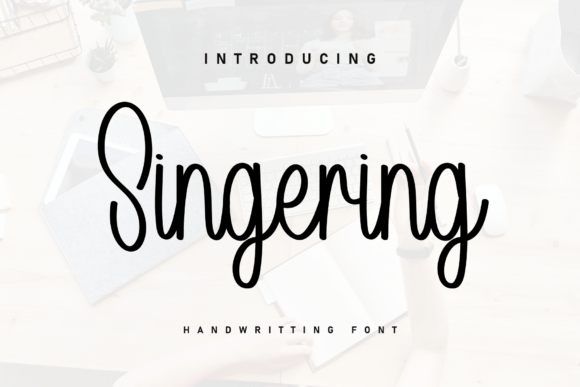
Singering is a meticulously crafted handwritten typeface that balances organic imperfection with intentional elegance. Unlike rigid, geometric sans-serifs or highly stylized script fonts with dramatic flourishes, Singering features smooth, flowing strokes and subtly varied line weights that mimic natural pen-on-paper movement. Its letters connect with gentle ease, yet retain clarity and legibility — even at smaller sizes.
Created by skilled typographers who understand both calligraphic tradition and digital design needs, Singering avoids two common pitfalls of handwritten fonts: excessive ornamentation (which hurts readability) and overly uniform “digital perfection” (which strips away authenticity). Instead, it delivers heartfelt perfection — a phrase that captures its essence: technically refined, emotionally resonant, and deeply human.
The Purpose Behind the Pen: Why Handwritten Fonts Matter Today
In an age saturated with AI-generated content, algorithm-driven feeds, and mass-produced visuals, audiences are increasingly drawn to signals of authenticity. Research in consumer psychology shows that people associate handwritten elements with trust, warmth, and personal attention. This isn’t nostalgia — it’s a subconscious response to intentionality.
Singering serves this need precisely. It doesn’t shout; it invites. Whether used on a boutique skincare label, a teacher’s classroom newsletter, or a nonprofit’s donor appreciation card, Singering communicates: “This was made with care — for you.”
Where Singering Fits in Real-World Design Projects
Its versatility makes Singering far more than a “pretty font.” Let’s explore how it enhances real creative work — across industries and platforms:
- Branding & Identity: Small businesses — from ceramic studios to freelance therapists — use Singering in logos and business cards to reflect their values: empathy, craftsmanship, and individuality. Example: A local flower shop named “Petrichor Blooms” pairs Singering’s soft “P” and looping “B” with muted earth tones for instant emotional resonance.
- Invitations & Stationery: Weddings, baby showers, and milestone celebrations benefit from Singering’s relaxed elegance. Unlike formal scripts that feel distant, Singering conveys intimacy without sacrificing polish — ideal for hand-addressed envelopes or digital save-the-dates.
- Social Media Graphics: On platforms like Instagram and Pinterest, where visual first impressions last less than two seconds, Singering adds distinctive texture. A wellness coach might overlay Singering quotes over serene nature photos — instantly signaling calm, approachability, and mindful presence.
- Educational Materials: Teachers and course creators use Singering in printable worksheets, slide headers, or welcome banners to soften academic tone and foster connection — especially valuable for early learners or neurodiverse students who respond well to warm, non-clinical aesthetics.
Clarifying Common Misconceptions
Before adopting Singering (or any handwritten font), it helps to clear up frequent assumptions:
- “Handwritten fonts aren’t professional.” Not true — when used thoughtfully, they elevate professionalism by signaling attention to detail and audience-centered design. Singering’s consistent spacing and open letterforms ensure it reads cleanly in both print and digital formats.
- “It only works for ‘cute’ or ‘feminine’ brands.” Singering’s neutral warmth transcends gendered styling. Paired with strong typography hierarchy (e.g., Singering headlines + clean sans-serif body text), it supports everything from architecture firms to sustainable fashion labels — all seeking sincerity over sterility.
- “I need calligraphy skills to use it well.” No skill required. Singering is a fully functional OpenType font with standard ligatures, alternate characters, and multilingual support (including Latin-based European languages). Designers simply install and apply — no drawing tablet needed.
How Singering Supports Creativity — Without Compromising Function
Creativity thrives when tools empower, not constrain. Singering does exactly that:
Its organic lines encourage designers to think beyond grids and symmetry — inviting white space, asymmetrical layouts, and tactile textures. Yet its technical precision ensures consistency across devices: whether viewed on a high-resolution MacBook, a mid-tier Android phone, or printed on recycled cotton paper, Singering retains its integrity.
For non-designers — educators, entrepreneurs, content creators — Singering lowers the barrier to visually compelling communication. Tools like Canva, Adobe Express, and Figma include Singering in their premium font libraries, allowing users to drag, drop, and instantly elevate presentations, flyers, or email headers — no design degree required.
Practical Tips for Using Singering Effectively
To get the most from Singering while honoring its strengths, consider these best practices:
- Pair wisely: Contrast Singering’s fluidity with a neutral, highly legible sans-serif (e.g., Inter, Lato, or Montserrat) for body text. Avoid competing scripts or overly decorative fonts.
- Respect hierarchy: Use Singering primarily for headlines, quotes, or short calls-to-action. Reserve longer paragraphs for supporting typefaces — clarity always comes first.
- Test legibility: Preview at 14–16px on screen and 10pt in print. If letters blur or connections become confusing, increase tracking (letter spacing) slightly — Singering includes built-in OpenType features to help with this.
- Consider context: Singering shines in human-centered spaces — personal blogs, community newsletters, artisan packaging. It’s less suited for technical documentation, legal disclaimers, or data dashboards where neutrality and speed-of-comprehension are paramount.
Why Singering Reflects a Broader Shift in Design Thinking
Singering isn’t just a font — it’s part of a meaningful evolution in visual communication. As remote work, digital fatigue, and information overload reshape how we engage with media, designers and brands are prioritizing emotional usability: how a design makes someone feel, not just what it says.
This aligns with E-E-A-T principles (Experience, Expertise, Authoritativeness, Trustworthiness) emphasized by search engines and users alike. A website using Singering thoughtfully — say, on an “About Me” page or client testimonial section — subconsciously reinforces credibility through perceived sincerity and effort.
Moreover, Singering supports accessibility goals when used intentionally: its open counters (the enclosed spaces in letters like “a,” “e,” and “o”) and generous x-height improve recognition for readers with dyslexia or low vision — especially when paired with sufficient contrast and responsive sizing.
Final Thought: Design With Heart, Not Just Precision
Typography is never neutral. Every font carries tone, history, and cultural weight. Singering reminds us that in a world chasing efficiency, speed, and scalability, there remains profound power in slowness — in the pause before a stroke begins, in the breath between words, in the quiet confidence of something handmade with purpose.
Whether you’re launching your first Etsy shop, designing a school project, or refreshing your company’s visual voice, Singering offers more than aesthetic appeal. It offers invitation: to slow down, connect deeply, and communicate — not just clearly, but compassionately.
So the next time you reach for a font, ask yourself: What feeling do I want my audience to carry away? If the answer is warmth, authenticity, and heartfelt clarity — Singering isn’t just an option. It’s the right choice.