Deborah: Where Handwritten Warmth Meets Modern Design Needs
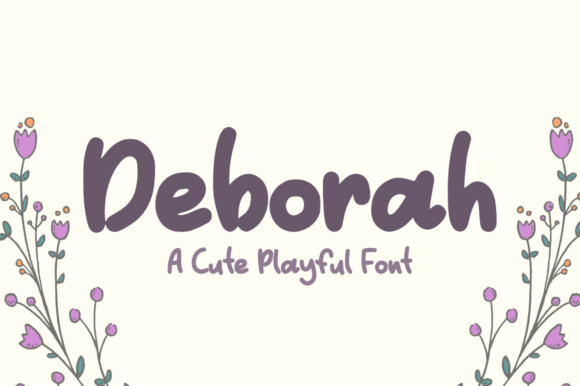
There’s a quiet shift happening across digital and print design—one that favors authenticity over polish, personality over perfection. In this landscape, Deborah stands out not as a novelty, but as a thoughtful response to how people truly connect with visual language today. Deborah is a sweet and friendly handwritten font. Its natural and unique style makes it incredibly fitting to a large pool of designs. The only limit is your imagination—but what makes that imagination so much more actionable now than five years ago?
Why Handwriting Fonts Like Deborah Feel Right—Right Now
Users scroll faster, skim deeper, and trust less. Algorithms reward engagement rooted in relatability—not just aesthetics. That’s why designers, marketers, and educators are turning to typefaces like Deborah: they carry the subtle cues of human presence. A slight variation in stroke weight, an organic baseline wobble, or the gentle taper of a terminal—all signal “made by hand,” which subconsciously signals care, intention, and approachability.
This isn’t about nostalgia. It’s about alignment. As remote work normalizes video calls with unscripted backgrounds and voice notes replace formal emails, audiences expect communication that feels *human*, not templated. Deborah doesn’t try to mimic calligraphy masters or mimic brush lettering—it offers something quieter and more consistent: the warmth of a thoughtful note passed between colleagues, the sincerity of a teacher’s feedback on student work, the grounded charm of a local café’s chalkboard menu.
From Niche to Necessary: How Deborah Fits Evolving Workflows
Five years ago, using a handwritten font across a brand system often meant sacrificing legibility at small sizes or technical reliability in CMS platforms. Today, Deborah is built for real-world use: it includes OpenType features like contextual alternates and stylistic sets, supports extended Latin character sets, and renders cleanly across modern browsers, email clients, and even embedded PDFs used in educational materials.
Consider a freelance educator building an online course. They need headers that feel inviting (not corporate), worksheets that encourage participation (not passive consumption), and certificates that feel earned—not generated. Deborah works seamlessly in Canva, Figma, and Google Docs, and exports cleanly to LMS platforms. No plugin required. No licensing friction. Just clarity, consistency, and warmth—without compromising function.
Similarly, small business owners launching a new product line no longer default to minimalist sans-serifs alone. They layer Deborah for taglines, testimonials, or packaging accents—creating contrast that guides attention while reinforcing brand voice. A skincare brand might pair Deborah with a clean geometric sans for ingredient lists; the combination says “science-backed, soul-led.”
Designing With Intention—Not Just Decoration
Using Deborah well means understanding where handwriting adds value—and where it doesn’t. It shines in contexts where emotional resonance matters most: welcome emails, handwritten-style quotes in blog posts, Instagram story highlights, workshop handouts, or personalized onboarding sequences. It falters when forced into dense body copy, legal disclaimers, or multilingual interfaces without proper localization support.
A realistic example: a therapist launching a private practice website. Their headline reads “You belong here”—set in Deborah. Below it, body text uses a highly readable serif. The contrast isn’t decorative; it’s psychological. Deborah opens the door. The serif walks you inside. That kind of hierarchy reflects user-centered thinking—not trend-chasing.
This is where Deborah differs from many script fonts: its lowercase ‘a’, ‘g’, and ‘e’ maintain generous x-height and open counters. It’s friendly without being fragile. You can set it at 24px on a retina screen and still read every word—even with mild visual fatigue or dyslexia-friendly settings enabled.
Beyond Aesthetics: What Deborah Reveals About Changing Expectations
The rise of fonts like Deborah mirrors broader shifts in how professionals define credibility. Ten years ago, authority was signaled through sharp lines, monochrome palettes, and tightly kerned all-caps headlines. Today, authority often lives in transparency: showing process, naming limitations, sharing behind-the-scenes moments. Deborah supports that ethos—not by hiding structure, but by softening it.
Think of a nonprofit publishing an annual impact report. Instead of sterile data visualizations alone, they integrate Deborah-set pull quotes from community members alongside charts. The font doesn’t distract from the numbers—it anchors them in lived experience. That balance reflects what readers increasingly demand: rigor *and* resonance.
It also aligns with accessibility-forward practices—not as an afterthought, but as part of inclusive design strategy. Because Deborah avoids extreme contrast spikes and maintains clear letterform distinction, it performs better than many decorative scripts when paired with thoughtful color contrast and sufficient sizing. It’s not WCAG-certified on its own—but it’s built to cooperate with standards, not fight them.
Practical Tips for Getting Started With Deborah
If you’re new to working with expressive type, start small—and stay intentional:
- Test before committing: Try Deborah in three real contexts—your email signature, a social media graphic, and a printed one-pager. Does it hold up across mediums? Does it feel authentic to your voice—or like a costume?
- Pair deliberately: Avoid pairing Deborah with other handwritten or script fonts. Instead, choose a neutral, highly legible companion—like a warm sans-serif (e.g., Inter or Poppins) or a sturdy serif (e.g., Merriweather or Source Serif). Let Deborah lead emotion; let the other face handle information density.
- Respect hierarchy: Use Deborah for headings, short quotes, or accent text—not long paragraphs. If you find yourself wanting to set entire sections in Deborah, ask: what feeling am I trying to convey? Is there another way—tone of voice, imagery, spacing—to achieve that without compromising readability?
- Check licensing early: Deborah is available in both free and premium versions. The free version covers personal use and basic web embedding. For commercial projects—especially SaaS dashboards, white-labeled tools, or client deliverables—verify usage rights. Clarity here prevents rework later.
Looking Ahead: Not Just a Font—A Design Mindset
Deborah won’t replace system fonts. Nor should it. Its strength lies in specificity—not universality. As AI-generated visuals flood feeds and templates flatten differentiation, tools like Deborah gain quiet importance. They’re not shortcuts. They’re invitations—to slow down, to consider tone, to prioritize connection over coverage.
That mindset extends beyond typography. It shows up in how a blogger chooses analog-style illustrations over stock photos. In how a marketer writes subject lines that sound like messages from a friend—not broadcast announcements. In how a founder signs off team updates with a brief, genuine note instead of an automated sign-off.
Deborah fits because it supports those choices—not replaces them. It doesn’t promise virality or conversion lifts. What it does offer is consistency of feeling across touchpoints, without demanding technical overhead or stylistic compromise. In an era where attention is fragmented and trust is earned in micro-moments, that kind of quiet reliability matters more than ever.
Final Thought: Your Next Small Typographic Choice Matters More Than You Think
You don’t need to overhaul your entire brand system to begin. Try swapping your current newsletter headline font for Deborah this week. See how subscribers respond—not just in clicks, but in replies. Notice whether your team starts using it organically in internal decks or shared docs. Observe where it feels effortless, and where it stumbles.
That observation—not the font itself—is where real design insight begins. Deborah is a tool. But the way you choose to use it reveals something deeper: how seriously you take the human element in every pixel, every line, every message sent.