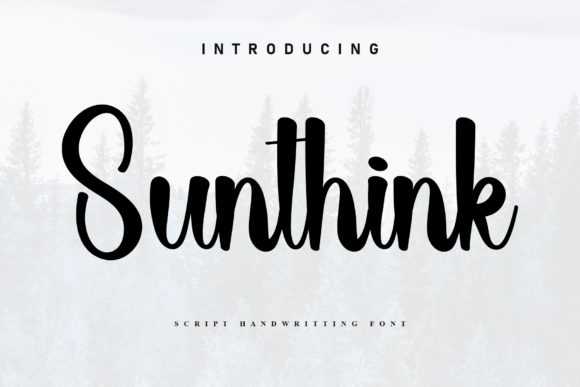
Sunthink: A Handwritten Font with Heartfelt Charm
If you’ve ever scrolled through a design project and paused at text that felt warm, personal, and quietly confident—you’ve likely encountered the quiet magic of a well-chosen handwritten font. Sunthink is one of those rare typefaces that doesn’t just look hand-drawn; it feels like it was written with care, intention, and a gentle smile. It’s not flashy or overly stylized. Instead, Sunthink offers smooth strokes, soft curves, and organic rhythm—like ink gliding across paper without hesitation.
What Makes Sunthink Stand Out?
Sunthink isn’t trying to mimic calligraphy or imitate brush lettering. Its charm lies in its authenticity: each character breathes with subtle variation, slight imperfections, and natural flow. That’s what gives it a relaxed, human quality—no two “a”s are identical, and spacing feels intuitive rather than rigid. It’s designed to feel effortless, even when used deliberately.
This sense of heartfelt perfection makes Sunthink especially effective when you want your message to land with sincerity—not polish for its own sake, but warmth that invites connection. Whether it’s a small business owner introducing their new bakery, a teacher crafting a welcome note for students, or a freelancer designing a portfolio cover, Sunthink helps communicate personality before a single word is read.
Where Does Sunthink Shine in Real Projects?
You don’t need advanced design skills to get great results with Sunthink. In fact, its simplicity is part of its strength. Here’s where it works beautifully—and why:
- Branding with soul: Small businesses and solopreneurs often struggle to balance professionalism with approachability. Sunthink bridges that gap—ideal for logos, shop signage, or packaging labels where friendliness matters as much as clarity.
- Invitations that feel personal: Wedding stationery, baby shower announcements, or even a cozy neighborhood potluck invite gain instant warmth with Sunthink. It signals thoughtfulness—not just formality.
- Social media graphics that pause the scroll: On platforms where attention spans are short, Sunthink adds visual calm. Try it for quote cards, event reminders, or Instagram story highlights—it stands out without shouting.
- Educational materials with empathy: Teachers and course creators use Sunthink for handouts, lesson headers, or digital worksheets. Its readability at medium sizes and gentle tone support learning without overwhelming learners.
- Blog headers and email newsletters: When paired with a clean sans-serif body font, Sunthink creates an inviting hierarchy—perfect for lifestyle bloggers, wellness coaches, or creative educators building trust through tone.
A Few Practical Notes Before You Begin
Like any tool, Sunthink works best when matched thoughtfully to your goals. Here’s what to keep in mind:
- It’s not meant for long paragraphs. Handwritten fonts shine in headlines, titles, and short phrases—not dense blocks of text. For body copy, pair it with a legible, neutral font like Inter, Lato, or Open Sans.
- Check contrast and size on screen. Because of its organic lines, Sunthink can appear lighter than expected at smaller sizes. Always test it on both desktop and mobile—especially if used in digital ads or email banners.
- Consider licensing early. Sunthink is typically available under commercial licenses, but usage rights vary by vendor. If you’re using it for client work or product packaging, confirm whether your license covers redistribution or embedded use.
- Think about tone alignment. Sunthink leans gentle, sincere, and unhurried. It may feel mismatched with high-energy tech startups or luxury fashion brands aiming for sharp minimalism—but perfect for mindful brands, local artisans, or wellness services.
Getting Started Is Simpler Than You Think
You don’t need Photoshop or years of typography training to begin using Sunthink. Many modern tools support custom fonts with just a few clicks:
- Download or activate Sunthink from a trusted source (like Google Fonts if available, or reputable foundries).
- In Canva, upload it to your brand kit; in Figma, install it locally and select it from your font menu.
- Start small: try it on a social post headline, a printable planner header, or a thank-you card graphic.
- Pay attention to how it pairs—try light weights with bold sans-serifs, or use all caps sparingly for emphasis without losing its relaxed vibe.
One beginner-friendly trick? Use Sunthink for names and key emotional words only—like “Welcome,” “Grateful,” or “Hand-poured”—while keeping functional text (dates, locations, instructions) in a simpler font. This keeps focus where it matters and lets Sunthink do its quiet work.
Why Designers and Non-Designers Both Reach for Sunthink
At its core, Sunthink answers a simple human need: to be seen and understood—not just heard. In a world saturated with algorithm-driven feeds and templated visuals, choosing a font like Sunthink is a small but meaningful act of intention. It says, “This matters to me. I took time.”
That resonance is why educators use it in classroom slides—to soften the tone of feedback or encouragement. Why wedding planners recommend it to couples wanting elegance without stiffness. Why podcast hosts choose it for episode title graphics—to signal intimacy before the first word is spoken.
And because it’s versatile enough to adapt without losing identity, Sunthink grows with you. A hobbyist making greeting cards today might use it tomorrow for a Shopify store banner. A blogger testing a new newsletter design could start with Sunthink headers and later expand into branded templates—all while keeping the same grounded, genuine voice.
Final Thought: Let It Breathe
The most effective use of Sunthink isn’t about covering every inch of space—it’s about giving it room. Leave generous margins. Pair it with ample white space. Let its organic flow speak for itself. When you do, Sunthink doesn’t just decorate your design—it deepens the feeling behind it.