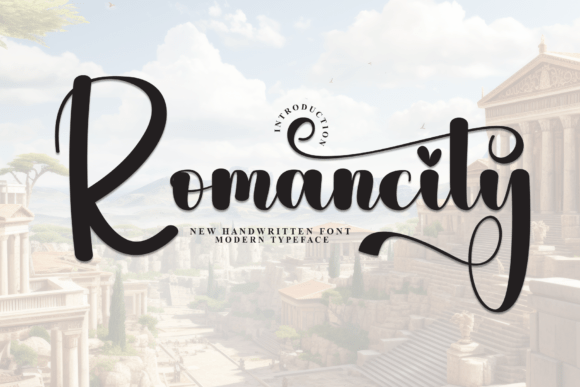
Romancity: A Strategic Choice for Whimsical, Human-Centered Design
Romancity isn’t just another display font—it’s a deliberate design decision with measurable impact on tone, perception, and emotional resonance. Built around the Sweet and Friendly handwritten aesthetic, Romancity delivers consistent charm without sacrificing clarity or intentionality. For professionals who understand that typography is never neutral—especially in high-stakes creative contexts like wedding stationery, brand storytelling, or audience-facing communications—Romancity serves as both a tool and a signal: one that conveys warmth, approachability, and thoughtful craft.
Why Romancity Fits Real-World Creative Strategy
Design choices compound over time. A font selected for its novelty wears thin when misaligned with audience expectations or brand values. Romancity avoids this pitfall by anchoring its whimsy in structural coherence: balanced letter spacing, legible joins, and intentional irregularities that feel hand-drawn—not haphazard. That distinction matters. When you’re designing wedding invitations, boutique packaging, or a children’s book cover, your audience isn’t scanning for typographic theory—they’re sensing whether the message feels sincere, joyful, and *human*. Romancity supports that feeling because it was built to do so—not as decoration, but as communication infrastructure.
For entrepreneurs launching lifestyle brands, educators creating inclusive classroom materials, or freelancers refining their visual identity, Romancity offers a rare combination: personality with precision. It doesn’t demand attention; it earns it through consistency and care. That makes it especially useful in scenarios where emotional connection directly influences outcomes—like converting website visitors into clients, encouraging RSVPs from guests, or building trust with parents reviewing a preschool’s welcome kit.
When Romancity Adds Strategic Value—and When It Doesn’t
Romancity excels in contexts where warmth, intimacy, and lighthearted elegance are functional requirements—not just stylistic preferences. Consider these high-leverage use cases:
- Wedding and event branding: Couples invest emotionally and financially in moments they want to feel personal and timeless. Romancity reinforces that intentionality—especially in headers, monograms, and envelope addressing—without veering into kitsch.
- Small business identity systems: Cafés, florists, handmade goods studios, and wellness practitioners often rely on authenticity as a differentiator. Romancity, used selectively (e.g., logo lockups or seasonal campaign headers), signals craftsmanship and care more effectively than generic script fonts.
- Educational and therapeutic materials: For educators developing social-emotional learning resources or therapists designing client handouts, Romancity softens formality without undermining authority—making complex topics feel more accessible.
Conversely, Romancity isn’t suited for body text, data-heavy reports, legal disclaimers, or interfaces requiring rapid scanning. Its strength lies in modulation—not dominance. Using it across an entire website or product catalog dilutes its impact and risks undermining readability and professionalism. Strategic use means reserving Romancity for moments where emotional tone carries measurable weight—like a headline above a heartfelt brand story, or the “Thank You” line on a customer receipt.
How to Use Romancity With Intention
Intentional use starts with alignment—not aesthetics alone. Before applying Romancity, ask three questions:
- What outcome am I trying to support? Is it increased guest response rates? Stronger emotional recall of a brand? A gentler tone in sensitive communications? If the goal isn’t tied to perception or feeling, Romancity may not be the right lever.
- Where does this font reinforce—not distract from—my core message? Pair Romancity with a clean, highly legible sans-serif (e.g., Inter, Lato, or Open Sans) for supporting text. Let it lead with personality; let the secondary typeface handle clarity and hierarchy.
- Does this usage reflect consistency across touchpoints? If Romancity appears on an invitation but disappears from the wedding website or signage, the effect feels accidental—not curated. Map where it lives: digital headers, printed collateral, social graphics—and ensure those applications serve the same strategic intent.
Practical tip: Test Romancity at real-world sizes. At 24px or smaller on screen, some handwritten details soften or disappear. Print at 12pt or below, and fine flourishes may fill in. Always proof in context—not just in a font menu.
Risks of Using Romancity Without Context
The biggest risk isn’t poor rendering—it’s misalignment. Romancity communicates a specific emotional register: tender, unhurried, affectionate. When applied to a fintech dashboard, corporate annual report, or urgent service notice, that register clashes with audience expectations. The result isn’t charm—it’s confusion or diminished credibility. Similarly, overuse erodes distinctiveness. A font meant to highlight joy loses power when every button, banner, and bullet point shouts the same tone.
Another subtle risk is accessibility oversights. While Romancity meets basic contrast standards at recommended sizes, its variable stroke width and connected forms can challenge readers with dyslexia or low vision if used for extended text. Always provide alternatives—such as alt text for image-based uses or fallback type stacks for web embedding—and never substitute Romancity for clear, structured information architecture.
Long-Term Value: Beyond the First Impression
Typography contributes to brand equity incrementally—but consistently. Romancity gains long-term value when treated as part of a broader system, not a one-off flourish. Think of it as a recurring motif: the handwritten “&” in a couple’s monogram, the custom “Thank You” stamp on a small-batch candle label, the animated greeting in a therapist’s email newsletter. These aren’t decorative add-ons; they’re reinforcement loops—small, repeated cues that build recognition, warmth, and memorability.
For creators managing multiple clients or evolving their own brand over years, Romancity’s versatility becomes strategic. It adapts across mediums (print, web, motion) without losing its essence—and because it avoids trend-driven extremes (no excessive bounce, no forced quirk), it ages well. That durability matters when you’re investing time in templates, style guides, or reusable assets. You’re not chasing a moment—you’re building continuity.
Final Guidance for Practitioners
If you’re evaluating Romancity for a project, begin with restraint. Start with one high-impact application: the headline on a landing page, the name on a wedding suite, the title treatment on a workshop flyer. Measure how it performs—not just visually, but functionally. Does it improve engagement? Does it align with feedback from actual users—not just peers or internal stakeholders? Refine from there.
Remember: Romancity doesn’t replace strategy. It amplifies it. Its power emerges when paired with strong content, thoughtful layout, and audience insight. Used well, it helps people feel seen before they’ve even read a word. That’s not whimsy—that’s design discipline with heart.