Palmira Club: Playful Retro Display Font
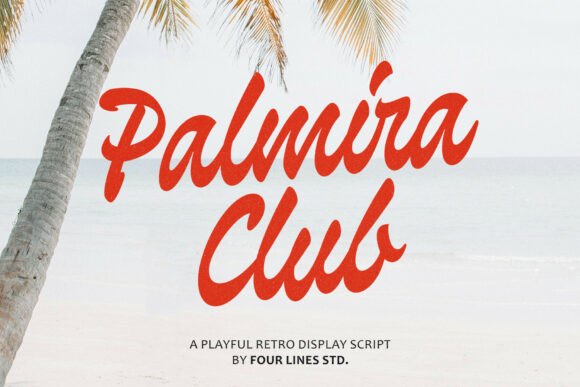
Imagine a font that feels like sunshine on vintage paper—warm, slightly bouncy, and full of personality. That’s Palmira Club: a playful retro display script built for impact, not subtlety. It’s not meant for body text or long paragraphs. Instead, it shines where first impressions matter most—on a café sign, a limited-edition t-shirt label, or the headline of your next Instagram campaign.
What Makes Palmira Club Stand Out?
At its core, Palmira Club is a dynamic handwritten script with expressive energy. Its letterforms flow naturally—not rigid or mechanical—but with gentle variation in stroke thickness and a subtle, rhythmic bounce along the baseline. This isn’t “perfect” calligraphy; it’s intentionally human. The soft contrast between thick and thin strokes adds warmth without sacrificing clarity. And because it’s designed for larger sizes, it stays legible even when scaled boldly on posters or packaging.
Unlike many retro fonts that lean heavily into 70s psychedelia or 50s diner kitsch, Palmira Club strikes a modern balance. It nods to mid-century charm but feels fresh—not nostalgic in a dated way, but nostalgic in a joyful, confident way. Think handmade signage at a boutique bakery, not a dusty roadside motel.
Where Does Palmira Club Fit Best?
This font thrives in visual contexts where tone and identity matter as much as information. If you’re launching a small-batch candle line, Palmira Club could bring instant character to your jar labels—suggesting craft, care, and approachability. A local florist might use it for seasonal promo posters, letting the rhythm of the letters echo the organic curves of petals and stems.
It works beautifully in fashion branding too. Picture it on a woven tote bag tag, a denim jacket patch, or a capsule collection lookbook cover. Because it’s expressive but not overly ornate, it pairs well with clean sans-serif body fonts—giving your brand hierarchy, contrast, and charm all at once.
For educators or workshop leaders, Palmira Club adds friendly authority to handouts, course titles, or event banners. It signals creativity and openness—ideal for makerspaces, art classes, or community garden initiatives. Freelancers building personal websites often choose it for hero section headlines, where they want to convey energy and authenticity without sounding corporate.
Real-Life Uses You Can Try Today
- A coffee shop owner uses Palmira Club for their chalkboard-style menu board—paired with a neutral sans-serif for prices and descriptions. The contrast makes specials pop while keeping the vibe relaxed and inviting.
- A ceramicist prints it on reusable gift tags for online orders. The soft, rounded shapes mirror the tactile feel of her mugs and bowls.
- A blogger documenting urban gardening applies it to Instagram story highlights (“Spring Tips”, “Compost Guide”)—adding visual consistency and a cheerful, grounded tone across platforms.
- A nonprofit organizing a neighborhood festival chooses Palmira Club for banner headers and vendor signage. It communicates community spirit without leaning into childish or overly formal styles.
Things to Keep in Mind Before You Use It
Because Palmira Club is a display font, it’s important to respect its purpose. Don’t try to set paragraphs, legal disclaimers, or dense product specs in it—it simply wasn’t built for that. Its strength lies in short bursts of text: names, slogans, titles, labels, and calls to action.
Also consider context and audience. While its warmth appeals broadly, some professional sectors—like finance, law, or medical tech—may find its playfulness mismatched with expected tone. That doesn’t mean it can’t be used there creatively (e.g., an internal wellness campaign), but always ask: *Does this support the message—or distract from it?*
Spacing matters more with scripts like this. Kerning (the space between individual letters) is carefully tuned in Palmira Club, so avoid auto-kerning overrides unless you’re experienced. And if you’re printing at small sizes—say, under 24pt on physical labels—test readability first. Its charm lives at scale.
How to Get Started With Palmira Club
You don’t need design experience to use Palmira Club well. Start simple: open your design tool (Canva, Figma, Adobe Express, or even Google Slides), upload the font file, and type a single word—“Summer”, “Handmade”, “Fresh”—in large size. Adjust color and background to see how it breathes. Try pairing it with a calm, no-nonsense sans-serif like Inter, Lato, or Montserrat for balance.
If you're working with a designer, share examples of brands or visuals you love—and mention Palmira Club by name. Most professionals will recognize it instantly or know where to source it. It’s widely available through reputable font marketplaces and often included in creative subscription services.
Why Designers and Small Teams Love It
Time is precious. When you’re juggling branding, social media, and client work, having a font that *just works*—without endless tweaking—is a quiet win. Palmira Club delivers strong visual identity fast. It doesn’t require custom lettering or illustration to feel unique, yet it avoids the generic look of overused script fonts.
It also scales emotionally. Whether you’re designing for a playful kids’ book launch or a refined artisanal chocolate brand, Palmira Club adapts—especially when paired thoughtfully with color, texture, and layout. Its expressiveness gives your project voice before a single word is read.
In short, Palmira Club is more than a font. It’s a quick, reliable way to add humanity, warmth, and memorable style to anything you make—whether you’re sketching ideas on paper or publishing globally online.