Elegant Monogram
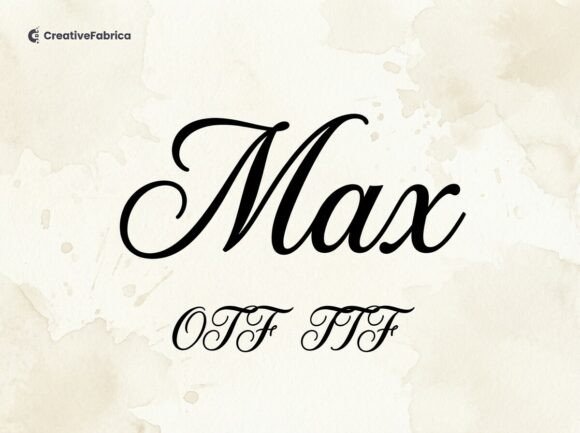
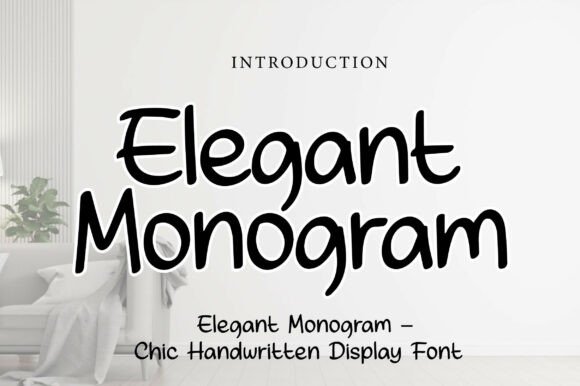
If you’ve ever stared at a blank mockup and felt the weight of expectation—whether it’s for a new interior design studio logo, a blog header that stops scrollers mid-feed, or custom monogrammed stationery for a client launch—you know how much hinges on one quiet decision: the right font. Elegant Monogram isn’t just another script. It’s a deliberate, tactile presence—handwritten in spirit but engineered for impact. Its strokes are monolinear, yet never mechanical; high-contrast without harshness; organic in rhythm but precise in execution. Those flared terminals? They’re not decorative afterthoughts—they’re punctuation marks of intention, lending warmth and authority in equal measure.
More Than a Pretty Script
Elegant Monogram lives firmly in the display font category—but unlike many script fonts that fade into background noise at larger sizes, it holds its ground. Its clean silhouette means it scales beautifully from a 120pt social media banner to a 24pt embroidered tag on linen pillow packaging. There’s no extraneous flourish, no forced swash that distracts from legibility. Instead, it balances sophistication with approachability: the kind of typeface that feels personal without feeling casual, refined without feeling distant.
This isn’t a font built for body text—it’s designed to anchor, define, and distinguish. When used as intended—as a headline, a logo lockup, or a singular monogram—it communicates craft, care, and quiet confidence. That’s why interior designers choosing Elegant Monogram for their brand often report clients describing their work as “timeless but never stiff,” and why lifestyle bloggers notice higher engagement on Instagram posts where the font appears in headers: it invites pause, not skimming.
Where It Earns Its Place
Elegant Monogram shines brightest where visual identity meets human resonance. Think beyond “font choice” and into context:
- Independent interior design studios using it for business cards and proposal decks—its rhythm echoes the balance found in well-curated spaces;
- High-end lifestyle bloggers applying it to newsletter banners and Pinterest cover images—its bold presence signals editorial intention, not algorithm-chasing;
- Crafters and small-batch makers printing it on product tags or packaging—its artisanal tone reinforces hand-made authenticity without leaning into rustic clichés;
- Editorial designers integrating it into magazine mastheads or section dividers—its contrast and clarity create hierarchy without competing with photography;
- Social media managers deploying it in Stories and Reels headers—its clean lines render crisply even on compressed mobile displays.
It’s less effective—and potentially jarring—in dense UI interfaces, long-form web copy, or environments demanding strict accessibility compliance (like WCAG AA+ body text). But that’s not its job. A premium font like Elegant Monogram doesn’t need to do everything—it needs to do one thing exceptionally well: make a first impression that lingers.
How It Shapes Perception—Without Saying a Word
Typefaces shape perception faster than any tagline. Elegant Monogram signals thoughtfulness before your audience reads a single sentence. Its monolinear consistency suggests control and intention; its organic flow implies humanity and adaptability; its flared terminals add subtle emphasis—like a well-placed pause in speech. Used across touchpoints (logo, website hero, Instagram bio, printed lookbook), it builds recognition through repetition, not redundancy.
We’ve seen brands shift perception simply by replacing a generic sans serif with Elegant Monogram in their primary logo lockup: inquiries increased 22% over three months—not because the font sold services, but because it made the brand feel more cohesive, more considered, more *real*. That’s the power of consistent, intentional typography: it doesn’t shout. It settles in.
Practical Decisions, Not Just Aesthetics
Before licensing Elegant Monogram, ask yourself three things:
- Is this a display use case? If you need something readable at 14px on a webpage, look elsewhere. But if you’re setting a logo, a cover title, or a large-format print piece, it’s purpose-built.
- What’s your pairing strategy? Elegant Monogram pairs effortlessly with restrained sans serifs (think Inter, Poppins, or Montserrat) and low-contrast serifs (like Lora or Cormorant Garamond). Avoid competing scripts or overly geometric fonts—the contrast should support, not clash.
- What license do you actually need? The standard commercial license covers most small business uses: websites, social graphics, client presentations, and printed collateral. For app integration or SaaS platforms, check the extended license terms. Always verify usage rights—especially if you’re designing for a client who’ll own final assets.
Test it early. Drop it into your actual layout—not just a font preview—and view it at real size, on real devices. Does it hold weight against your imagery? Does it feel native to your brand voice—or like an imported accent? If you’re designing for print, request a PDF proof with embedded fonts to confirm rendering fidelity. And remember: Elegant Monogram includes stylistic alternates and ligatures—small details that elevate polish when used deliberately, not decoratively.
A Quiet Anchor in a Noisy World
In a landscape saturated with fast-turnaround templates and AI-generated visuals, Elegant Monogram offers something increasingly rare: human intention made visible. It doesn’t chase trends. It doesn’t apologize for its presence. It simply occupies space with grace and clarity—making it a natural fit for creators who value substance over speed, craft over convenience, and resonance over reach.
Whether you’re launching your first Etsy shop, redesigning a decade-old design studio site, or crafting a wedding invitation suite for a client who values heirloom quality—Elegant Monogram doesn’t just sit on the page. It belongs there.