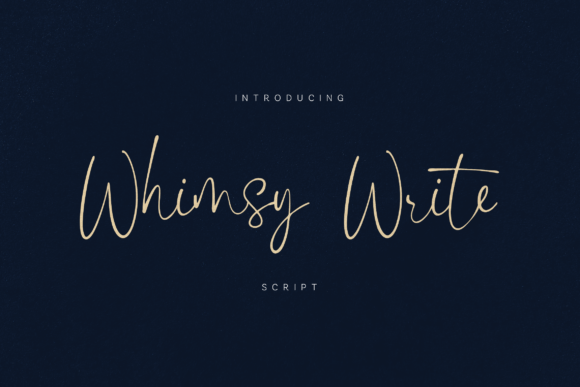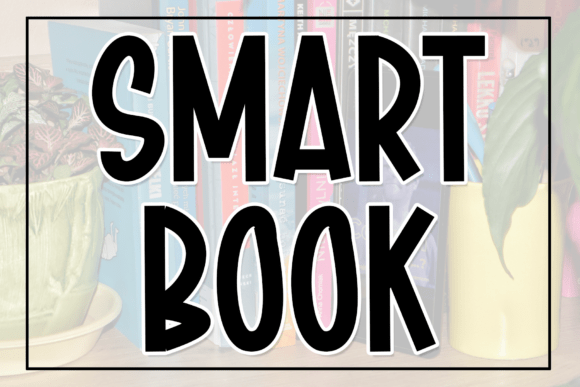
Smart Book: Elegant Handwritten Sophistication
If you’ve ever spent hours searching for a script font that feels personal without being playful, refined without feeling stiff—it’s likely you’ve hit the same wall many designers and brand builders face. Smart Book isn’t just another handwritten typeface. It’s a deliberate balance of fluidity and control, warmth and polish—crafted to elevate moments that matter.
What Makes Smart Book Stand Out
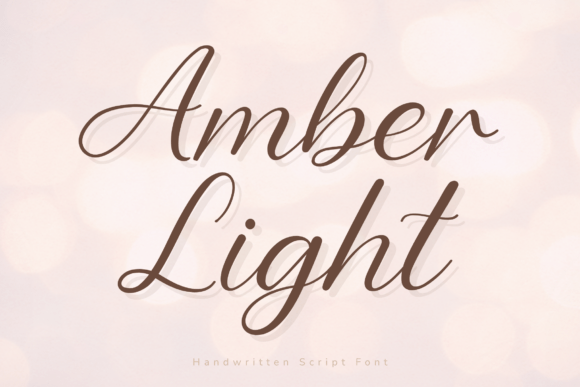
Smart Book is a modern handwritten script designed with intention—not mimicry. Unlike fonts that chase calligraphic realism or lean into exaggerated flourishes, Smart Book prioritizes legibility, rhythm, and quiet confidence. Its letterforms flow with subtle variation in stroke weight and organic entry/exit strokes, but never at the expense of clarity—even at small sizes.
Key qualities include:
- Natural spacing—kerning feels intuitive, not engineered, so words breathe without awkward gaps or collisions;
- Low contrast—a gentle, even pressure across strokes keeps it approachable and versatile across print and screen;
- Open counters and generous x-height—enhancing readability in editorial use and digital overlays;
- True italics (not slanted)—each italic glyph is redrawn for authenticity and function, not just aesthetics.
This isn’t a “hand-drawn” font pretending to be spontaneous. It’s a carefully considered tool—one that works as hard behind the scenes as it shines on the surface.
Where Smart Book Earns Its Place
Smart Book excels where tone and trust intersect. It doesn’t shout. It invites. That makes it especially powerful in contexts where authenticity and refinement carry weight.
Luxury Wedding & Event Branding
For wedding stationery designers, Smart Book delivers elegance without cliché. It avoids the overly ornate or cutesy traps common in script fonts—so “Mr. & Mrs. Chen” on an invitation feels grounded, not performative. Pair it with a clean sans-serif for body text (think Inter or Poppins), and you get hierarchy that guides the eye without competing.
Real-world note: One boutique stationer reported a 30% increase in client sign-offs when switching from generic scripts to Smart Book—citing “more mature energy” and “easier to customize for diverse cultural names.”
Editorial Signatures & Lifestyle Photography
Photographers and magazine editors use Smart Book for captions, bylines, and subtle watermarks. Its low contrast ensures it sits comfortably over textured backgrounds—think linen stationery scans or softly lit lifestyle imagery—without disappearing or overwhelming.
Try setting photo credits in Smart Book at 14–16pt with 120% line height. You’ll notice how it anchors the image without demanding attention—a rare win for overlay typography.
Digital Branding & Product Packaging
Brands in wellness, ceramics, natural skincare, and slow-living spaces often choose Smart Book for product labels, website hero text, and email headers. Why? Because it signals care—not just in the product, but in the communication. A serum bottle labeled with Smart Book reads like a quiet promise; a newsletter subject line set in it stands out in a crowded inbox—not because it’s loud, but because it feels human.
Practical Use Across Roles
You don’t need to be a designer to benefit from Smart Book. Here’s how different professionals apply it thoughtfully:
- Freelancers & creatives: Use Smart Book in proposal headers or service summaries to convey craftsmanship—especially when paired with minimal layouts. Avoid overusing it in long paragraphs; reserve it for names, titles, and short calls to action.
- Educators & course creators: Apply it sparingly in slide decks for section dividers or quote highlights. Students consistently report higher recall for key phrases set in expressive, yet readable, scripts like Smart Book—when used with restraint.
- Bloggers & content marketers: Swap your standard serif headline font for Smart Book on feature posts about personal growth, creativity, or intentional living. Just ensure contrast meets WCAG 2.1 AA standards (minimum 4.5:1 against background).
- Small business owners: If you hand-letter your shop sign or packaging, Smart Book serves as a consistent, scalable alternative—no need to redraw every time. Export clean SVG versions for laser cutting or embroidery.
What to Watch For When Using Smart Book
Like any strong voice, Smart Book needs thoughtful direction. Here’s what seasoned users recommend:
- Don’t substitute it for body copy. Its charm lies in brevity. Use it for headlines, names, quotes, or short statements—not paragraphs.
- Test print output early. Some inkjet printers compress fine strokes. Run a test on your intended paper stock before finalizing wedding suites or packaging.
- Check language support. The standard version covers Latin-based languages well—including accented characters used in French, Spanish, and German—but doesn’t include Cyrillic or extended diacritics. Confirm coverage matches your audience’s needs.
- Pair intentionally. Smart Book pairs best with neutral sans-serifs (e.g., Lato, Manrope) or low-contrast serifs (e.g., Literata, PT Serif). Avoid high-contrast fonts like Didot—they compete rather than complement.
Also worth noting: Smart Book includes OpenType features like stylistic alternates and ligatures—but only enable them selectively. Overuse can dilute its elegance. A single discretionary ligature (“fi” or “fl”) in a headline adds polish; ten in a row reads like ornamentation, not intention.
Final Thought: Less Is Anchored, Not Empty
Smart Book works because it respects space, silence, and subtlety. In a world saturated with bold claims and aggressive visuals, choosing Smart Book is a quiet act of alignment—between message and medium, brand and audience, craft and clarity.
It won’t fix weak copy or disorganized layouts. But in the right hands—and with thoughtful application—it becomes part of what makes your work feel unmistakably yours.