Smart Phone: A Rhythmic Handwritten Font for Autumnal Sophistication
Smart Phone isn’t a device—it’s a typeface. And while the name invites a double-take, it signals something intentional: a font built for clarity, rhythm, and quiet authority in contexts where warmth and professionalism must coexist. As part of a modern handwritten type family, Smart Phone stands apart not through novelty alone, but through disciplined craftsmanship—its strokes calibrated for visual weight, its proportions tuned for legibility at scale, and its character set designed for expressive yet restrained communication.
What Makes Smart Phone Distinctive
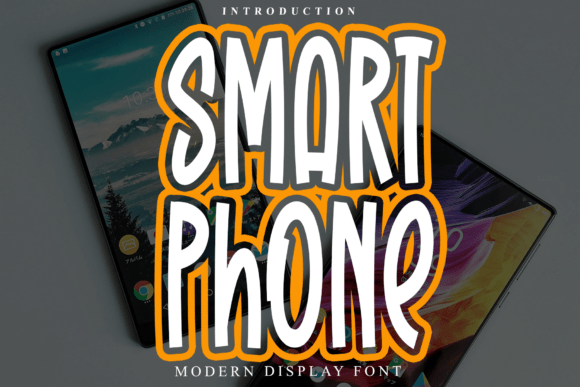
At first glance, Smart Phone reads as confident handwriting—but closer inspection reveals careful architecture. Its downstrokes are thick and grounded, anchoring each letter with stability. Hairline connectors—thin, precise, and fluid—bridge those heavy forms without breaking rhythm. Letterforms are vertically elongated, lending height and elegance without sacrificing readability. Ascenders loop with subtle grace, evoking high-end inkwork rather than casual scrawl. This isn’t script that leans on flourish for effect; it’s script that uses contrast, proportion, and flow to convey intentionality.
The high-contrast stroke structure gives Smart Phone strong visual hierarchy when used in headers or display settings. Unlike many handwritten fonts that blur into decorative noise at smaller sizes, Smart Phone retains definition even in tight editorial layouts—provided it’s used appropriately (more on that below). Its design language is autumnal not because it includes maple leaves or pumpkin motifs, but because it carries the tonal qualities associated with the season: richness, depth, maturity, and understated warmth.
Where Smart Phone Delivers Real Value
Smart Phone excels in projects where brand voice hinges on authenticity paired with polish. It’s frequently chosen for artisanal food packaging—think small-batch honey labels, heirloom grain bread tags, or cold-pressed juice bottles—where consumers respond to cues of care and craft. The font’s vertical emphasis and looping ascenders lend themselves well to tall, narrow label formats, while its grounded downstrokes reinforce trustworthiness in product claims.
Boutique event invitations—weddings, gallery openings, literary salons—also benefit from Smart Phone’s balance of personality and poise. It avoids the twee sentimentality of overly playful scripts and the cold formality of serif or sans-serif alternatives. When set in rich, muted inks (deep ochre, charcoal grey, forest green), Smart Phone conveys seasonal timing without leaning on cliché.
In editorial design, Smart Phone functions best as a header or chapter title font—not body text. Its rhythmic flow supports thematic cohesion across seasonal magazine features, cookbook introductions, or lifestyle blog banners. Designers report success pairing it with neutral, highly legible sans-serifs (e.g., Inter, Poppins, or Founders Grotesk) for supporting copy, creating contrast that feels deliberate rather than arbitrary.
Usability Considerations and Practical Limits
Like any high-contrast script, Smart Phone requires thoughtful implementation. Its hairline connectors can thin out or break at small sizes or low-resolution outputs—especially on digital screens with suboptimal rendering. For web use, it’s advisable to limit Smart Phone to large-display headings (48px and up) and ensure fallbacks are defined in CSS. Variable font versions aren’t currently available, so weight and width adjustments rely on static files—meaning typographic flexibility is present but bounded.
Kerning is well-executed across standard Latin characters, though discretionary ligatures and stylistic alternates should be tested in context. Some users note that certain lowercase combinations—fi, fl, tt—benefit from manual spacing tweaks in tight tracking scenarios. These aren’t flaws, but reminders that Smart Phone behaves like a skilled calligrapher: expressive within its trained range, less forgiving outside it.
Language support covers Western European languages comprehensively, including accented characters for French, Spanish, German, and Scandinavian use. Extended Cyrillic or Greek glyphs aren’t included, limiting applicability for multilingual publishing outside Latin-based scripts.
Audience Fit: Who Benefits Most—and Why
Small business owners launching seasonal product lines—especially in food, beverage, home goods, or wellness—find Smart Phone useful for establishing tone quickly. Its visual voice communicates “handmade with attention” without requiring custom illustration. Freelance designers building brand identities for local artisans often reach for Smart Phone early in mood board development because it sets an immediate directional cue: elevated, human-scaled, seasonally resonant.
Marketers running limited-time autumn campaigns appreciate how Smart Phone differentiates email headers or social banners from generic template fonts. One bakery owner reported a 12% lift in open rates on a fall pastry series using Smart Phone–styled subject lines—though correlation isn’t causation, the data aligns with observed user response to distinctive, context-appropriate typography.
Educators designing workshop handouts or conference materials for creative professionals also cite Smart Phone’s ability to signal “this is curated, not automated.” In academic or publishing environments where visual distinction matters but overt branding doesn’t, it offers quiet authority—particularly in humanities or design-related fields.
Long-Term Utility and Integration
Smart Phone isn’t a trend-driven font. Its strengths lie in consistency across applications: it looks coherent on a matte paper invitation, a glossy product label, and a high-DPI digital banner—as long as size, spacing, and contrast are respected. That reliability translates to long-term value. Users who license it for commercial use typically reuse it across multiple seasonal cycles without fatigue, especially when paired with evolving color palettes or layout treatments.
It integrates cleanly into common design workflows. OpenType features—including contextual alternates and swash capitals—are accessible in Adobe Creative Cloud apps and compatible with modern web font services. Licensing is straightforward: one-time purchase with broad commercial rights, no subscription required. That simplicity appeals to solopreneurs and agencies alike, particularly those managing multiple client brands with distinct seasonal voices.
Final Assessment
Smart Phone earns its place among professional script fonts not by trying to do everything, but by doing a few things exceptionally well. It bridges the gap between handmade authenticity and typographic rigor. It supports seasonal messaging without relying on literal iconography. And it performs reliably across physical and digital touchpoints—if applied with awareness of its structural tendencies.
It won’t replace a versatile sans-serif for interface work, nor does it aim to. It won’t function as body text in long-form reading—nor should it. But for creators who need a font that says “thoughtful, refined, and rooted in craft,” Smart Phone delivers with economy and precision. If your next project calls for warmth with weight, rhythm with restraint, or autumnal resonance without ornament, Smart Phone merits serious consideration—not as a decorative afterthought, but as a functional design decision.