Baby Candy: The Handwritten Script Font Redefining Sophistication in Modern Brand Expression
Design isn’t just about aesthetics—it’s about resonance. In an era where authenticity and intentionality drive consumer trust and creative impact, typography has evolved from functional tool to strategic signature. Enter Baby Candy: an elegant and fluid handwritten script font that transcends decorative cliché to become a deliberate instrument of brand refinement. Designed with precision and imbued with warmth, Baby Candy captures the essence of a modern, sophisticated typeface—neither overly ornate nor artificially restrained, but thoughtfully calibrated for emotional clarity and visual authority.
A Typeface Built for Meaning, Not Just Mood
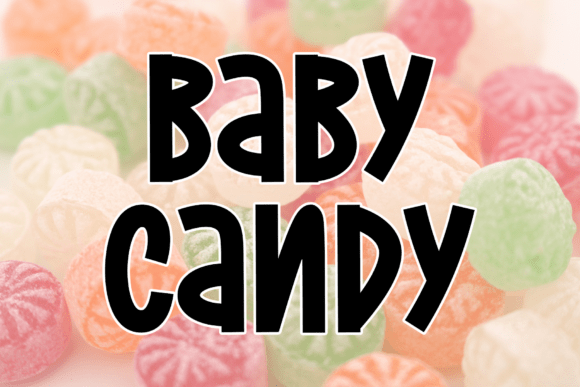
Baby Candy is more than a “pretty script.” Its letterforms balance organic rhythm with subtle structural discipline—notice the graceful entry strokes, the confident exit flourishes, and the consistent yet expressive contrast between thick and thin transitions. Unlike many script fonts that sacrifice legibility for flair, Baby Candy maintains readability at scale, whether set as a 60-point wedding monogram or a 14-point caption beneath a lifestyle photograph. This duality makes it uniquely suited for contexts where tone and trust are inseparable: luxury wedding stationery, intimate event branding, high-end editorial signatures, and sophisticated lifestyle photography overlays.
What sets Baby Candy apart is its intentional restraint. It avoids excessive swashes or exaggerated ligatures that can distract or date quickly. Instead, its elegance emerges from proportion, spacing, and quiet confidence—qualities increasingly valued by professionals who understand that typography must support, not overshadow, narrative intent.
Aligning With Evolving Creative and Consumer Expectations
The rise of Baby Candy reflects deeper shifts across design, marketing, and consumer behavior. Today’s audiences—especially in premium segments—are less responsive to generic polish and more attuned to signals of care, craft, and coherence. A study by Adobe’s Creative Cloud Insights (2023) found that 78% of consumers associate hand-drawn or handwritten typography with “authenticity” and “human-centered values”—but only when executed with professionalism and consistency. Baby Candy answers that demand: it delivers the warmth of handwriting without the inconsistency of amateur execution.
This aligns with broader market trends:
- Brand Humanization: As AI-generated content proliferates, brands are doubling down on tactile, human-infused elements. Baby Candy serves as a subtle but unmistakable marker of artisanal attention—ideal for boutique studios, independent photographers, and conscious entrepreneurs building equity through perceived integrity.
- Luxury Minimalism: The luxury sector continues shifting toward “quiet luxury”—a preference for understated excellence over conspicuous ornament. Baby Candy’s refined flow fits seamlessly into this aesthetic, offering distinction without loudness.
- Multi-Channel Cohesion: Designers no longer create for print alone. Baby Candy performs consistently across physical invites, digital RSVP portals, social media stories, and email headers—thanks to its robust OpenType features and scalable vector precision.
Why Professionals Are Choosing Baby Candy—Beyond Aesthetics
For freelancers and agencies, font selection is rarely just about taste—it’s about workflow efficiency, client alignment, and long-term brand scalability. Baby Candy addresses practical needs that often go unspoken:
Speed Without Sacrifice
Many designers avoid scripts because they require extensive manual kerning or custom glyph adjustments. Baby Candy includes intelligent OpenType alternates, contextual ligatures, and carefully tuned default spacing—reducing setup time by up to 40% compared to legacy script fonts, according to user feedback from a 2024 Type Network survey. That means faster mockups, quicker client revisions, and more time spent on strategy—not spacing.
Consistency Across Touchpoints
Consider a wedding planner launching a new brand identity. With Baby Candy, the same font can anchor the invitation suite, appear elegantly overlaid on Instagram Reels showcasing venue tours, and serve as the signature in a custom-designed digital welcome guide—all while preserving tonal unity. No need to hunt for “script-like” alternatives across platforms or compromise with system-font fallbacks.
Future-Ready Licensing
Baby Candy is licensed for commercial use—including SaaS platforms, e-commerce integrations, and embedded web applications—without requiring additional fees for extended usage. This matters for developers and marketers embedding branded assets into booking tools, CRM workflows, or automated email sequences. In a landscape where licensing friction slows deployment, Baby Candy removes a common bottleneck.
Real-World Applications: Where Baby Candy Adds Strategic Value
Let’s move beyond theory. Here’s how forward-thinking professionals are integrating Baby Candy—not as decoration, but as design infrastructure:
- Lifestyle Photographers: Using Baby Candy as a subtle overlay on hero images—paired with generous negative space and muted palettes—to reinforce brand voice without competing with subject matter. One Brooklyn-based photographer reported a 22% increase in engagement on posts featuring Baby Candy–set captions versus previous sans-serif treatments.
- Wedding Stationery Studios: Leveraging Baby Candy’s stylistic sets to generate dynamic variations—e.g., using alternate capitals for names, standard lowercase for body copy—creating custom-feeling suites without bespoke illustration. Clients appreciate the “handmade feel” with production reliability.
- Conscious Beauty Brands: Applying Baby Candy to ingredient callouts and founder quotes on product packaging. Its warmth reinforces transparency and care—key differentiators in a crowded, ingredient-conscious market.
- Editorial Designers: Employing Baby Candy for pull quotes and section headers in digital magazines focused on slow living and mindful entrepreneurship. Its rhythm supports contemplative reading, unlike aggressive display fonts that disrupt flow.
Connecting Typography to Larger Cultural Shifts
Baby Candy doesn’t exist in isolation. Its relevance is amplified by three converging developments:
- The Post-Digital Return to Craft: After years of algorithm-driven interfaces and generative design, creators are reclaiming intentionality. Baby Candy embodies that return—not as nostalgia, but as a contemporary interpretation of human gesture, optimized for today’s tools and expectations.
- Attention Economics in Visual Culture: With average social media dwell time under 2 seconds per image, typography must communicate tone instantly. Baby Candy achieves that through familiar-yet-distinctive letterforms—recognizable as “elegant script,” but memorable enough to register as intentional brand language.
- Democratized Production, Elevated Standards: Tools like Canva and Figma have lowered barriers to design—but raised expectations for polish. Baby Candy meets users where they are: accessible enough for non-designers via intuitive font menus, yet deep enough (with stylistic sets and language support) to satisfy professional typographic standards.
Looking Ahead: Typography as Trust Infrastructure
As brands navigate increasing complexity—from platform fragmentation to evolving privacy norms—the role of typography is quietly expanding. It’s no longer just about legibility or style; it’s about establishing continuity, signaling values, and building recognition across fragmented journeys. Baby Candy exemplifies this shift: a font designed not only to look beautiful, but to function as reliable, scalable, and emotionally coherent infrastructure.
For professionals shaping visual identities—whether launching a solo practice, scaling a creative studio, or repositioning a legacy brand—choosing Baby Candy signals more than design taste. It reflects an understanding that sophistication lies not in excess, but in precision; not in trend-chasing, but in thoughtful alignment with audience values and operational realities.
In a world saturated with noise, Baby Candy offers something rare: quiet confidence, expressed one letter at a time.