Learn to Write: The Handwritten Font That Bridges Learning, Creativity, and Modern Design
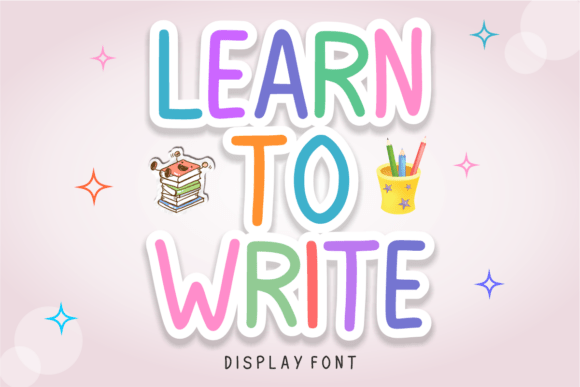
Imagine a font that doesn’t just look handwritten—but feels like it belongs in the margins of a well-loved notebook, the title page of a children’s storybook, or the cheerful bulletin board of an elementary classroom. Learn To Write is more than a typeface; it’s a thoughtful design solution born from empathy for learners, educators, and designers alike. Crafted with precision and clarity, this legible, personable, and highly readable handwritten font emulates the confident, clean penmanship of a diligent student—neither overly cursive nor rigidly mechanical, but warmly human and intentionally accessible.
What Is Learn To Write—and Why Does It Matter?
At its core, Learn To Write is a professionally designed OpenType font family optimized for educational and creative applications. Unlike generic “handwriting” fonts that lean into whimsy or inconsistency—think exaggerated loops, erratic baselines, or distracting flourishes—this font prioritizes legibility without sacrificing personality. Its fluid strokes, balanced letterforms, and harmonious spacing make it exceptionally easy to read, even for early readers still mastering letter recognition and word segmentation.
This isn’t just aesthetic preference—it’s pedagogical intention. Research in early literacy consistently highlights the importance of consistent, clear visual models when children are learning to write and read. Fonts with irregular sizing, ambiguous shapes (e.g., indistinguishable a and o, or l and i), or excessive ornamentation can unintentionally hinder decoding skills. Learn To Write avoids those pitfalls by offering distinct, well-proportioned characters grounded in real-world handwriting conventions.
Who Benefits Most From This Font?
- Educators: Teachers use it to create tracing worksheets, classroom posters, reading flashcards, and interactive digital lessons—ensuring students see consistent, developmentally appropriate letter models.
- Children’s Book Authors & Illustrators: Its scholarly yet friendly tone supports storytelling without overwhelming young eyes—ideal for chapter headings, speech bubbles, or narrative text in picture books and early readers.
- Designers & Content Creators: Whether crafting homeschool curricula, printable activity packs, or branded educational apps, designers rely on Learn To Write to convey warmth, authenticity, and approachability—without compromising professionalism.
- Parents & Homeschoolers: Its readability and gentle aesthetic make it perfect for custom learning materials—from alphabet charts to reward certificates—that feel personal, not mass-produced.
More Than Just Pretty Letters: The Educational Power of Thoughtful Typography
Typography isn’t neutral—it carries meaning, sets tone, and influences cognition. In education, font choice directly impacts engagement, comprehension, and retention. Consider these real-world examples:
- A kindergarten teacher replaces a decorative, hard-to-read font on her sight-word wall with Learn To Write. Within two weeks, students begin self-correcting letter formation during writing time—citing the “clean lines” they see on the wall as their reference.
- An indie author publishes a phonics-based early reader using Learn To Write for all text. Reviewers note how “effortlessly children follow along,” attributing part of the book’s success to its visual clarity—not just its content.
- A curriculum developer integrates the font into a digital handwriting app. Because each character mirrors natural stroke order and exit points, children intuitively grasp how letters connect—even before formal cursive instruction begins.
These outcomes aren’t accidental. They reflect how Learn To Write bridges cognitive science and design thinking: its x-height is generous, ascenders and descenders are clearly differentiated, and spacing between letters and words supports fluent eye movement—a key predictor of reading speed and accuracy in emerging readers.
Dispelling Common Myths About Handwritten Fonts
Not all handwritten fonts serve the same purpose—and misunderstanding their roles can lead to poor design choices. Here’s what Learn To Write clarifies:
- Myth: “Any handwritten font works for kids.” Reality: Many so-called “school fonts” prioritize charm over clarity. Some lack proper kerning (letter spacing), making words like “llama” or “book” visually confusing. Learn To Write is meticulously spaced and tested for readability at small sizes and low-resolution screens.
- Myth: “Handwritten fonts aren’t professional.” Reality: When used intentionally—as headers, quotes, or branding accents—Learn To Write adds humanity to digital interfaces, presentations, and marketing materials. Its scholarly elegance makes it equally at home in a university workshop handout or a modern edtech startup’s website.
- Myth: “It’s only for print.” Reality: With full webfont support (WOFF2, variable font options), Learn To Write performs beautifully across devices—from interactive whiteboards to tablets used in Montessori classrooms.
Fitting Into Today’s World: From Classrooms to Creative Studios
In an era where screen time dominates learning, tactile, human-centered design has never been more valuable. Learn To Write meets learners where they are: balancing digital convenience with analog warmth. It’s used in:
- Hybrid Learning Environments: Teachers embed the font into Google Slides and Canva templates, ensuring consistency between printed take-home packets and on-screen lessons.
- Accessibility-Forward Design: While not a dyslexia-specific font (like OpenDyslexic), its clean structure, open counters, and unambiguous shapes support readers with diverse learning needs—especially when paired with appropriate contrast and line spacing.
- Creative Entrepreneurship: Etsy sellers use it to brand printable planners, habit trackers, and affirmation cards—leveraging its trustworthy, handcrafted appeal to stand out in saturated markets.
- Corporate Learning & Development: HR teams incorporate Learn To Write into onboarding workbooks and internal training decks to soften formal corporate tone and foster psychological safety during skill-building.
How to Start Using Learn To Write—Practically and Purposefully
Getting started is simple—and impactful:
- Download & Install: Available via reputable font marketplaces and direct licensing, with both desktop and webfont packages.
- Start Small: Replace one recurring element first—like worksheet titles or classroom labels—to observe how students respond to the improved clarity.
- Pair Thoughtfully: Combine with a clean sans-serif (e.g., Inter or Open Sans) for body text in mixed-format documents—letting Learn To Write shine in headings, annotations, or callouts.
- Test Across Contexts: Print a sample at 12pt and display it on a tablet at 18pt. Does it remain legible? Does it invite interaction? Adjust size and weight accordingly.
Remember: typography is teaching. Every font you choose communicates values—about rigor, care, inclusivity, and joy in learning. Learn To Write embodies all four.
Final Thought: Creativity Begins With Clarity
Learning to write isn’t just about forming letters—it’s about building confidence, expressing ideas, and connecting with others through language. A font like Learn To Write honors that journey. It doesn’t shout. It doesn’t distract. Instead, it offers a steady, encouraging hand—guiding eyes, supporting minds, and quietly empowering every learner, creator, and educator who chooses it.
So whether you’re drafting your first tracing sheet, designing a literacy app, or simply seeking a more heartfelt way to communicate—choose a font that teaches as it types. With Learn To Write, every character is an invitation: to learn, to create, and to grow—clearly, kindly, and without compromise.