Bicycle
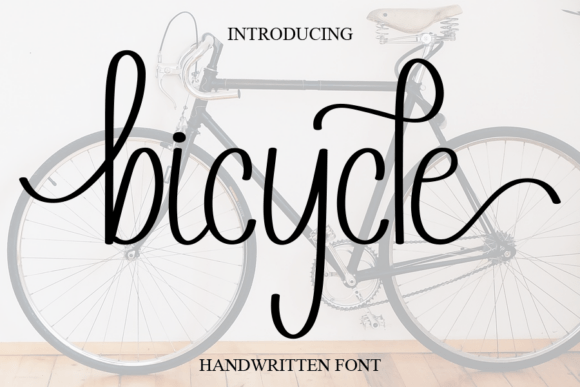
Bicycle is a sweet, cursive handwritten font that feels like a gentle whisper on the page—soft curves, relaxed spacing, and just enough personality to charm without overwhelming. It’s not flashy or fussy; it’s warm, approachable, and quietly elegant. Think of it as the kind of typeface you’d choose for a note tucked inside a wedding invitation, the tagline on a small-batch skincare label, or the title of a boutique fashion lookbook. It doesn’t shout—it invites. And because it balances romance with ease, Bicycle works where many script fonts stumble: in real-world design contexts that need both grace and authenticity.
Where Bicycle Fits Naturally (and Where It Shines Brightest)
Unlike highly formal scripts that demand perfection or ultra-casual doodle fonts that lack polish, Bicycle lives comfortably in the middle—ideal for brands and creators who want elegance without stiffness, charm without cliché. Here’s where it shows up most meaningfully:
- Wedding stationery: From save-the-dates to menu cards, Bicycle adds tenderness without looking dated. Its slight variation in stroke weight gives it organic movement—like ink freshly laid down by hand—making it feel personal rather than templated.
- Small-batch branding: Artisanal coffee roasters, ceramic studios, and independent perfumers often lean into soft, human-centered aesthetics. Bicycle pairs beautifully with muted palettes and natural textures, reinforcing craftsmanship and care in a single glance.
- Greeting cards & stationery: Whether it’s a birthday card with a heartfelt message or a thank-you note for a client, this font carries warmth. Its open letterforms remain legible even at smaller sizes—unlike tighter scripts that blur when scaled down for printed inner text.
- Fashion lookbooks & editorial layouts: Designers use Bicycle for section headers, model names, or subtle captions. It complements photography without competing—especially with soft-focus imagery, linen backgrounds, or minimalist layouts.
- Digital marketing assets: Social media banners, email headers, and limited-edition promo graphics benefit from its joyful rhythm. On screens, it holds character without sacrificing clarity—particularly when used against clean, uncluttered backdrops.
Who Benefits—and How They Use It Differently
A freelance designer sourcing fonts for client projects might reach for Bicycle when the brief calls for “timeless but not traditional” or “feminine but not frilly.” They’ll likely pair it with a neutral sans-serif (like Poppins or Inter) for body copy—creating contrast that feels intentional, not accidental.
A small business owner launching a new line of handmade candles? They may use Bicycle for their logo lockup and product labels—leveraging its romantic tone to evoke comfort, nostalgia, and care. The font subtly signals quality and attention to detail, especially when paired with thoughtful packaging design.
A wedding planner curating digital templates for clients might embed Bicycle into Canva-ready designs—not just for aesthetics, but because couples consistently respond to its sincerity. It avoids the overused “calligraphy” trope while still feeling special, helping planners stand out in saturated markets.
Even educators and wellness coaches sometimes choose Bicycle for workshop handouts or mindfulness journal covers. Its gentle flow mirrors the intention behind those spaces: calm, reflective, grounded. It doesn’t distract—it supports.
Practical Considerations Before You Apply It
Like any expressive font, Bicycle thrives when matched thoughtfully to context—not just copied and pasted. A few real-world notes to keep in mind:
- Legibility matters more than flair: While gorgeous at headline size, avoid using Bicycle for long paragraphs or dense UI text. Its connected letters and delicate terminals aren’t built for scanning. Reserve it for short, high-impact phrases—names, titles, quotes, tags.
- Pairing is key: This font sings alongside clean, modern sans-serifs or soft serif companions (think Lora or Cormorant Garamond). Avoid pairing it with other decorative scripts—that creates visual noise. One voice, well-placed, is stronger than several competing.
- Weight and spacing adjustments help: Some design tools compress cursive fonts unintentionally. Always check letter spacing—especially around common ligatures like “fi,” “fl,” or “th.” A tiny bit of extra tracking can improve readability significantly.
- Consider your audience’s expectations: A tech startup pitching enterprise software probably won’t resonate with Bicycle—but a local florist launching a seasonal bouquet subscription? Absolutely. Match tone to trust. If your audience values precision and authority, this isn’t the lead font. If they value heart, craft, and connection? It’s a quiet superpower.
Strengths That Make It Stand Out
What sets Bicycle apart isn’t just how it looks—it’s how it behaves across uses. It’s carefully engineered to retain charm at multiple sizes, with consistent x-height and generous counters (the enclosed spaces inside letters like “a” or “e”). That means it stays friendly whether printed on a 2×3” sticker or blown up across a café window decal.
It also avoids the “too perfect” trap. Many script fonts rely on rigid geometry—uniform loops, mathematically precise angles. Bicycle includes subtle inconsistencies: a slightly lifted baseline here, a tapered terminal there. Those imperfections are intentional—they echo real handwriting, making it feel human first, decorative second.
And unlike free handwritten fonts that skimp on language support, Bicycle typically includes extended Latin characters, basic punctuation, and OpenType features like contextual alternates—so “hello” doesn’t repeat the same “l” shape twice. That nuance makes a difference in professional output.
When to Pause and Reflect
That said, Bicycle isn’t universal. It’s less effective in high-contrast environments (like bold signage against busy city backdrops), or where immediate scannability is non-negotiable (think airport wayfinding or emergency instructions). It’s also not ideal for brands aiming for sharp, futuristic, or industrial vibes—its strength lies in softness, not edge.
If your project hinges on multilingual support beyond Western European languages—or requires extensive numeral styling (like financial reports)—verify the specific Bicycle version you’re licensing. Not all releases include Cyrillic, Greek, or currency symbols.
Finally, remember: fonts carry tone before they convey text. Choosing Bicycle is a quiet declaration—“I value warmth. I honor slowness. I believe beauty lives in simplicity.” That intention resonates deeply with audiences craving authenticity in a fast-moving world. Used with awareness and care, it doesn’t just decorate—it connects.