Barbie Maphia: A Cheerful Romantic Font Duo
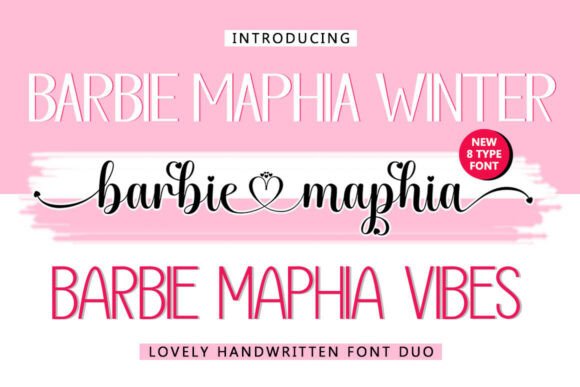
Barbie Maphia isn’t a person, a brand, or a trend—it’s a thoughtfully crafted font family designed to evoke warmth, charm, and quiet elegance. At its core, it pairs two distinct but complementary typefaces: a bold, friendly sans-serif with subtle cursive flourishes and heart-shaped accents, and a refined, flowing script that feels handwritten yet polished. Together, they form a cohesive visual language—neither overly sweet nor stiffly formal, but gently romantic and unmistakably modern.
Why This Font Duo Stands Out
What makes Barbie Maphia different from other “romantic” fonts is its balance. Many decorative typefaces lean too hard into whimsy or nostalgia—but Barbie Maphia stays grounded. Its sans-serif base has generous spacing and soft curves, making it highly legible even at smaller sizes. The script doesn’t sacrifice readability for flair; each letter connects smoothly without overcrowding. And those delicate hearts? They’re sparingly placed—not as clipart, but as intentional typographic details that reinforce theme without distracting from message.
For Wedding Planners & Stationery Designers
If you design invitations, vow books, or ceremony signage, typography sets the emotional tone before a single word is read. Barbie Maphia works especially well for spring or garden weddings, intimate elopements, or brands centered on authenticity over opulence. A planner might use the sans-serif for event timelines and venue names (clarity first), then switch to the script for couple names or poetic quotes (emotion second). It’s versatile enough for digital RSVP cards and foil-stamped keepsakes alike—no redesign needed across formats.
For Small Business Owners & Boutique Brands
Feminine-leaning businesses—think candle makers, herbal apothecaries, or handmade jewelry studios—often struggle to find fonts that feel personal without seeming juvenile. Barbie Maphia bridges that gap. Its warmth supports approachability; its refinement signals care and craft. One boutique owner used it across her Instagram captions, product tags, and packaging labels—keeping visual consistency while letting each medium shine. She avoided pairing it with overly ornate fonts or clashing colors, instead using soft neutrals and muted pastels to let the type breathe.
What to Watch For Commercially
- Licensing clarity: Barbie Maphia is typically offered with both personal and commercial licenses—check whether your intended use (e.g., client work, print-on-demand products) falls under the terms.
- File format support: It includes OpenType features like stylistic alternates and ligatures, which help avoid awkward letter collisions in the script—especially helpful when typesetting names or short phrases.
- Web performance: If embedding on a website, test loading speed. Some versions include WOFF2 variants optimized for browsers, while others may require manual optimization.
For Educators & Content Creators
Teachers designing classroom posters or educators creating digital learning materials often need fonts that engage without overwhelming. Barbie Maphia’s gentle contrast makes it ideal for thematic units—Valentine’s Day literacy activities, social-emotional learning handouts, or student-led celebration banners. One elementary art teacher used the script for student name tags and the sans-serif for instructions, helping young readers distinguish between “who” and “what.” For creators building online courses or printable planners, it adds personality without sacrificing structure.
For Hobbyists & DIY Enthusiasts
You don’t need design experience to enjoy Barbie Maphia. Its intuitive pairings mean even beginners can create something lovely with minimal effort. Try it in free tools like Canva (uploading the desktop version) or Google Slides (via third-party add-ons). A hobbyist making custom mugs or tote bags might use the script for a short phrase (“You’re My Person”) and the sans-serif for a small date or location underneath. No kerning adjustments required—the spacing is built-in and forgiving.
When It Might Not Fit Your Needs
Barbie Maphia shines in context-rich, emotionally resonant applications—but it’s not meant for everything. It’s not ideal for dense body text, technical documentation, or high-contrast accessibility needs (its light weight and delicate strokes reduce legibility at small sizes or low resolutions). If your project demands strict neutrality, corporate authority, or multilingual support beyond basic Latin characters, you’ll likely want to explore alternatives.
How Skill Level Shapes Use
Beginners often appreciate how Barbie Maphia reduces decision fatigue: the duo is pre-matched, so there’s no guesswork about hierarchy or contrast. Experienced designers, meanwhile, value its flexibility—using the script alone for monogrammed stationery, or layering both fonts creatively in editorial layouts. Some tweak color overlays or add soft shadows to enhance depth without losing subtlety. The key is restraint: this font family communicates best when given space to breathe.
Real-World Priorities Across Users
- Freelancers care about licensing clarity and time-to-output—Barbie Maphia speeds up mockups because pairing is already solved.
- Bloggers weigh readability on mobile versus aesthetic cohesion—its balanced weights hold up well across devices when used intentionally.
- Consumers buying digital downloads look for ease of installation and compatibility—most versions include clear instructions and work across Mac, Windows, and major design apps.
- Educators prioritize accessibility and print fidelity—test how it renders on school printers before mass-producing handouts.
Ultimately, Barbie Maphia invites intentionality. It won’t fix unclear messaging or poor layout—but paired with thoughtful content and purposeful design choices, it quietly elevates tone, reinforces identity, and helps people feel seen. Whether you're handwriting love notes or launching a brand rooted in kindness, its blend of boldness and tenderness offers a rare kind of typographic empathy.