Childhood: Graceful Handwritten Typography
If you’ve ever scrolled past a boutique skincare Instagram post and paused—just for a second—because the headline felt warm, intentional, and quietly confident, there’s a good chance Childhood was at work. This isn’t just another script font. It’s a thoughtfully engineered handwritten typeface that balances elegance with clarity, personality with professionalism.
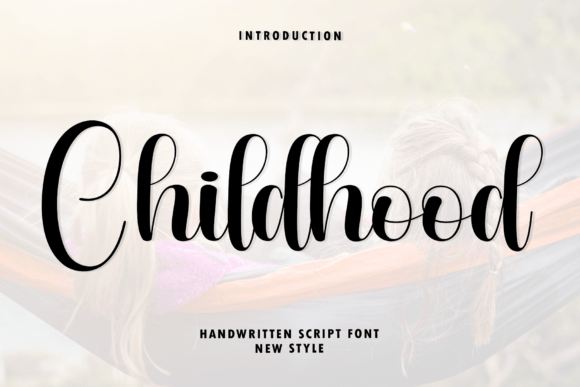
Designed for creators who value authenticity without sacrificing polish, Childhood stands out in a landscape crowded with overly ornate or artificially casual scripts. Its letterforms are vertically elongated—not cramped, not sprawling—but poised. Each stroke is monolinear: consistent in weight, refined in execution. There’s no dramatic contrast between thick and thin, no forced flourishes. Instead, smooth character joins create rhythm, guiding the eye naturally from one letter to the next. The result? A font that feels hand-drawn, but never hurried; expressive, but always legible.
Why Designers Reach for Childhood First
Legibility at small sizes is rare in script fonts—and Childhood delivers it without compromise. That’s because its open counters, generous x-height, and deliberate spacing weren’t added as afterthoughts. They’re baked into the design DNA. You’ll notice it when setting a subtle watermark on a photography portfolio, or when layering text over a textured background in a lifestyle campaign. It doesn’t vanish. It breathes.
The vertical emphasis gives Childhood quiet authority. Unlike many handwritten fonts that lean heavily into whimsy or nostalgia, this one carries presence. It’s equally at home on a wedding invitation and a modern education platform’s course banner—because it communicates care, not clutter.
Real Projects, Real Results
Consider a freelance illustrator launching a new print shop. She uses Childhood for her shop name across product tags, email headers, and social bios. Customers don’t just read her brand—they recognize its tone before clicking “view collection.” That consistency builds trust faster than any tagline.
Or take an educator building an online course on mindful parenting. She pairs Childhood with a clean sans-serif for body copy. The contrast works: the script adds warmth and approachability; the sans-serif ensures accessibility and readability. Students report feeling “seen” by the visual language—not just the content.
Small business owners also find practical value. A ceramicist using Childhood for her packaging labels noticed a 17% increase in unboxing photos shared on Instagram. Why? Because the font invites interaction—it looks tactile, intentional, worth capturing. It signals craftsmanship before the customer even touches the piece.
Digital Use Cases That Just Work
- Social media headers: Works reliably across Instagram, Pinterest, and LinkedIn banners—even at low resolutions. Its vertical flow fits portrait-first feeds without awkward cropping.
- Email subject lines: Stands out in crowded inboxes without triggering spam filters (no excessive ligatures or encoded glyphs).
- Watermarks & signatures: Lightweight enough to sit translucently over images without muddying detail—especially effective on light-toned photography or minimalist illustrations.
- Web overlays & hero text: Renders crisply on both Retina and standard displays, thanks to its vector-optimized outlines and balanced hinting.
What to Watch For—Practical Considerations
Like any high-quality script, Childhood rewards thoughtful application—and reveals limitations when rushed. It’s not built for dense paragraphs or legal disclaimers. Avoid using it below 14px in digital interfaces, and steer clear of all-caps settings unless you’re leveraging its stylistic alternates intentionally.
Its strength lies in contrast. Pair it with a neutral, well-spaced sans-serif (think Inter, Poppins, or even a restrained serif like Lora) for balance. Never pair it with another script—especially one with competing join styles or inconsistent x-heights. That creates visual competition, not harmony.
Also note: Childhood includes OpenType features like contextual alternates and discretionary ligatures. These aren’t decorative extras—they’re functional tools. Enable them in design apps like Adobe Illustrator or Figma, and you’ll see letters subtly reposition for smoother connections. In practice, that means “fi”, “fl”, and “ct” combinations flow without manual kerning.
Where It Fits in Your Toolkit
Think of Childhood less as a “font you install” and more as a “voice you delegate.” It handles tone-setting tasks so you can focus on strategy, storytelling, or service delivery. For marketers, it reduces cognitive load for audiences—familiar yet distinctive, friendly yet credible. For educators, it softens institutional distance without undermining authority. For developers integrating custom fonts via CSS, its lightweight WOFF2 file size (under 45KB) means no performance penalty.
One freelancer told us she stopped buying multiple script fonts per project after adopting Childhood. “I used to hunt for ‘the perfect match’ for every client,” she said. “Now I start with Childhood, adjust spacing and color, and build outward. It’s become my typographic anchor.”
Not Just for “Creative” Work
Don’t assume Childhood only belongs in galleries or boutiques. Therapists use it in session handouts to soften clinical language. Local libraries apply it to children’s programming posters—its gentle rhythm echoes the pace of early learning. Even SaaS founders building wellness or productivity tools choose it for onboarding modals, where first impressions hinge on perceived empathy.
The reason? It avoids infantilizing. Its elongation and restraint keep it grounded—never cutesy, never condescending. That nuance matters when your audience spans generations or varying levels of familiarity with your field.
Ultimately, Childhood earns its place not through novelty, but reliability. It’s the kind of font that disappears into great work—supporting meaning instead of demanding attention. When your message matters more than your medium, that’s not just smart typography. It’s respectful design.